
Charles Francis Summers appears to have sometimes given his name to anything he carved, even if it was the original design of another sculptor. [Scarlet, 632]

harles Francis Summers (1858-1945), was born in Richmond, Melbourne. He was the son of the well-respected Somerset-born sculptor, Charles Summers (1825-1878), who had emigrated to Australia in 1852, before opening a studio at 55A Via Margutta in Rome in the later 1860s. Young Charles's earliest training was with his father, but he later studied chiefly under "Professor Seitz and Professor Chelli for drawing and modelling" (Scarlet 631). Although he continued to be based in Rome, he often travelled back and forth between Italy and New South Wales to sell his pieces, both in Australia and New Zealand. Working in the classical medium of garden statuary, he completed eight life-sized marble statues, reproductions of famous classical works, and imported them to Australia for Sydney's Royal Botanic Gardens in 1883. Eleven of his sculptures are housed in the Rotorua Museum in the Bay of Plenty region of New Zealand.
His work was chiefly influenced by the neoclassical and Baroque sculptors Antonio Canova (1757-1822), Giovanni Maria Benzoni (1809-1873), Johann Georg Seitz (1810-1870), and Carlo Chelli (1815-1890). In 1904 he finally closed the studio in Rome, which he had continued to use after his father's death in 1878, and retired to Australia, having set up a studio in Melbourne at Grosvenor Chambers, Collins Street in 1887. He campaigned for some time during the course of 1901 to gain popular support for a memorial square to the late Queen Victoria in Melbourne, whose statue would be housed in a separate pavilion.
Surrounding and supporting this would be statues of the four leading statesmen of the Queen's reign, namely Peel, Beaconsfield, Gladstone, and Salisbury, or, if it be preferred, figures representing the arts, sciences, and industries developed during the reign of the Queen. [The Argus, Melbourne, cited in Scarlet, 634]
Despite having failed in this bid, Summers brought his family to Australia in 1904, and settled permanently in Melbourne. After the final sale of his works in his studio there on 13 June 1905, he ceased to produce further sculpture. In 1933, he accepted the position of Grand Lodge Librarian at the Masonic Club in Melbourne, a post which he held until 1940.
Early in the twentieth century six of his marble garden statues in the Botanic Gardens, frequently vandalized, were restored. The eight works now flank the palace gardens steps, above the Rose Garden and off Shakespeare Place, opposite the Art Gallery for New South Wales, near the Morshead Fountain Gate, off Macquarie Street in Sydney.
The Four Seasons in the Royal Botanic Gardens, Sydney
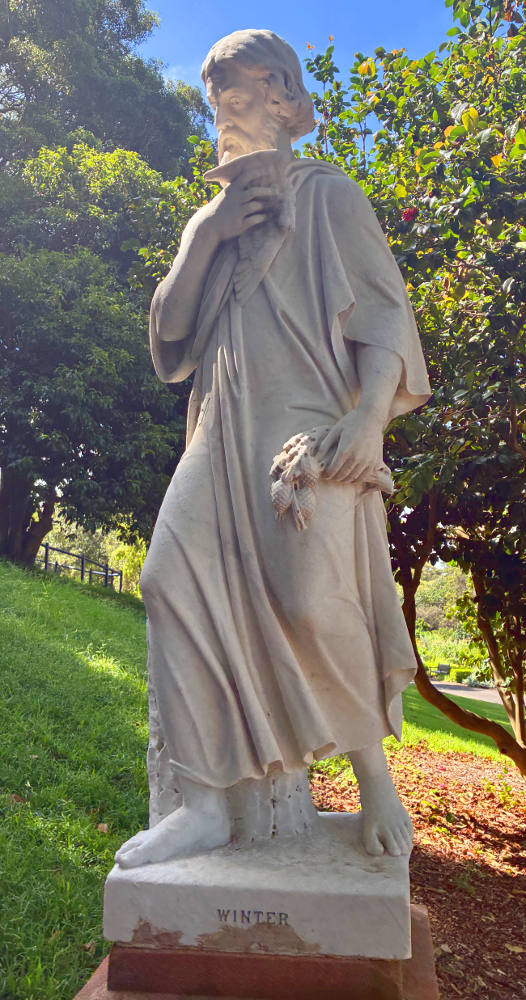
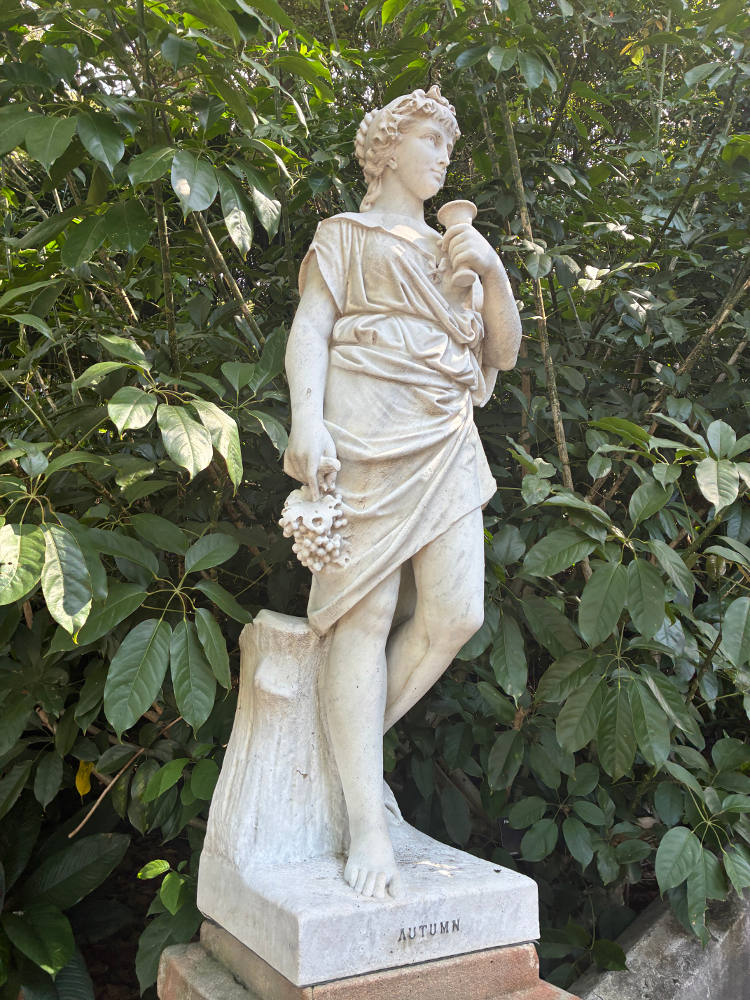
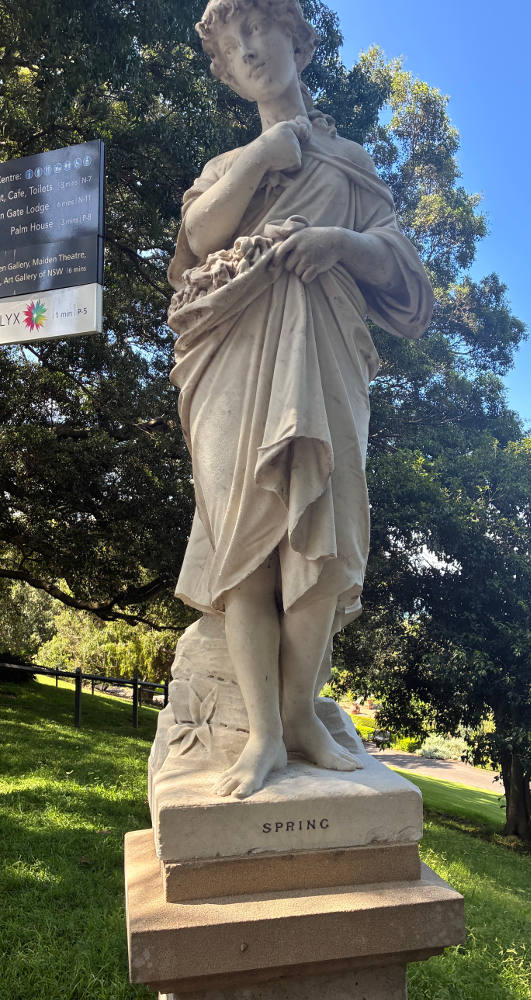
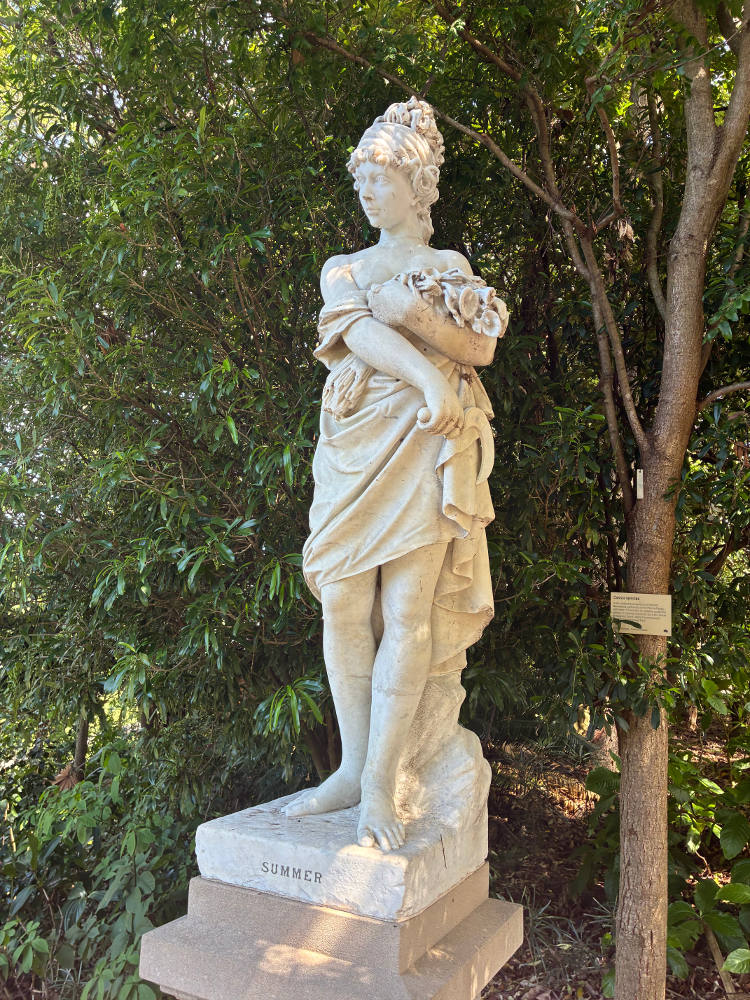
The Boxers in the Royal Botanic Gardens, Sydney
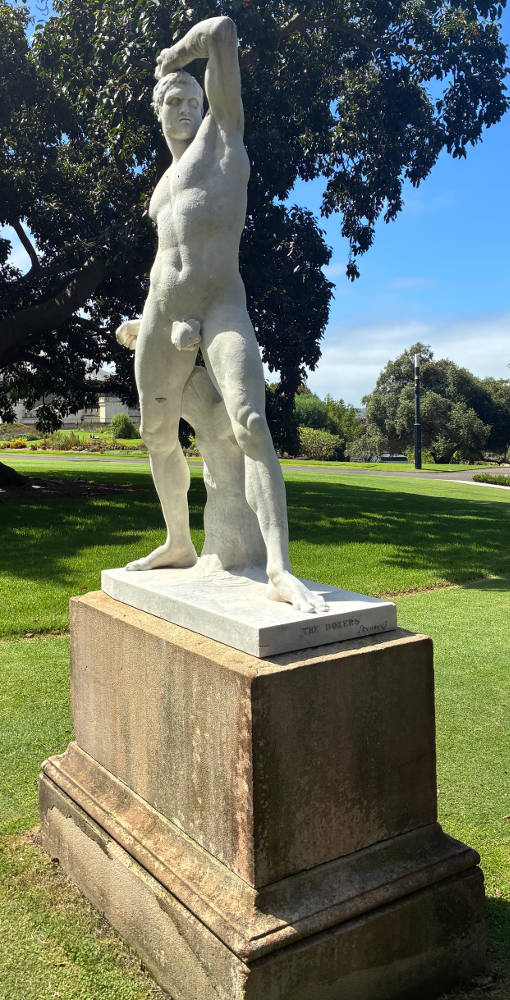
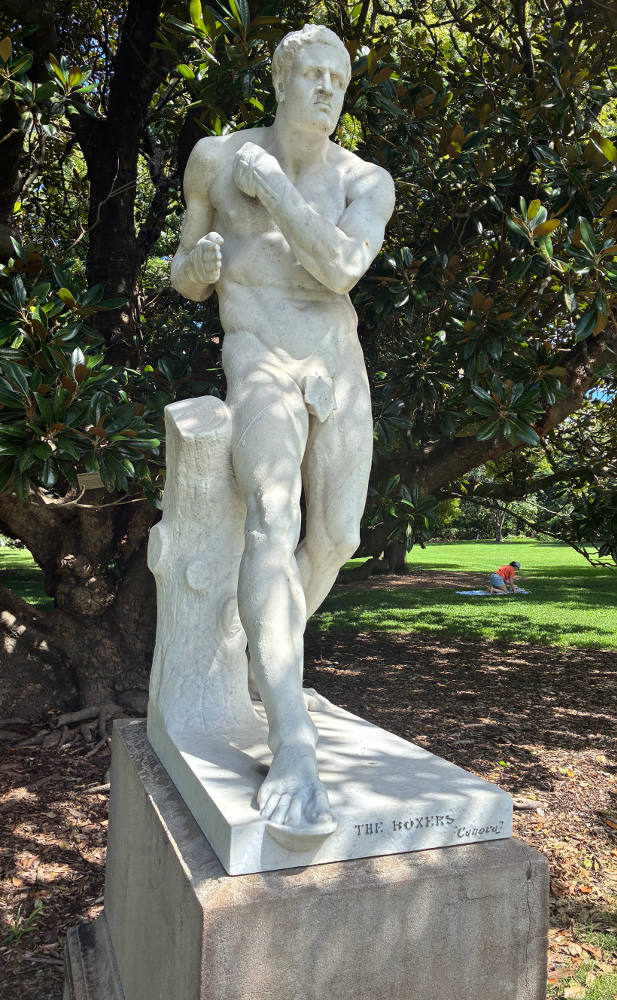
Other Figures in the Royal Botanic Gardens, Sydney
Photographs and text by Philip V. Allingham. [Click on all the images for more information about them, and for larger pictures. You may use the images without prior permission for any scholarly or educational purpose as long as you (1) credit the person who scanned the image and (2) link your document to this URL in a web document or cite the Victorian Web in a print one.]
Bibliography
Eastwood, Jill. "Summers, Charles (1825-1878)." Australian Dictionary of Biography. Vol. VI (1976). National Centre of Biography, Australian National University. Melbourne University Press. adb.anu.edu.au (accessed 21 February 2026).
Scarlett, Ken. "Summers, Charles Francis." Australian Sculptors. West Melbourne: Thomas Nelson Australia, 1980. 630-35.
Created 23 February 2026