
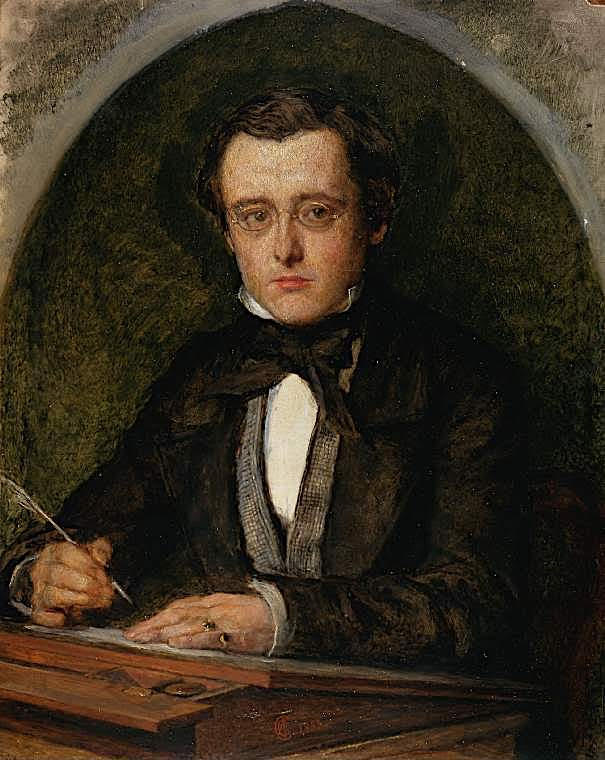
 hen, in
April 1852, twenty-seven-year-old Wilkie Collins began writing for Charles Dickens's
weekly magazine Household
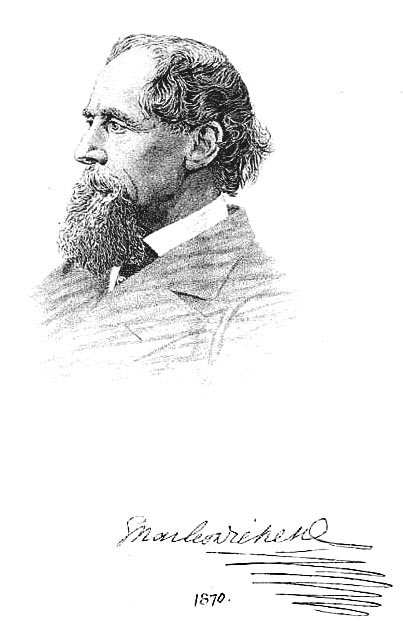
Words, Dickens at forty years of age was already a Victorian institution with
a half-share in the magazine and an annual salary of five hundred pounds. Whereas Dickens
had an average annual income of anywhere from £1,163 to £1,652 from his work on the
magazine, Collins, a relative newcomer, was initially paid by the column. Although in
September 1856 he finally became a staff writer who would be paid the standard rate of
five guineas per week, Collins like his fellows George Augustus Sala and
Elizabeth Gaskell was not given a by-line in this
journal "conducted by Charles Dickens." Collins did, however (unlike the other staff
writers), get his name into Household Words by way of
the advertisements for one of his novels, The Dead Secret,
serialised in Dickens's journal from January to June 1857, by which point Collins's
talents had begun to establish him in the eyes of the Victorian reading public as an
author independent of his connection with the weekly magazine. Together with the other
writers in Dickens's "stable" (including Gaskell, Sala, Adelaide Anne Procter, Eliza
Lynn, Harriet Parr, and Percy Fitzgerald) between 1858 and 1861 Collins collaborated with
Dickens on extended short stories or novellas for four "Extra Christmas numbers" of the
weekly magazine Household Words (1850-58) and its successor,
All the Year Round.
The separation of Dickens's and Collins's identities as writers came in 1862, when
Collins resigned from Dickens's staff; he did not work with Dickens again until the pair
collaborated on No Thoroughfare for the 1867 Christmas number
of the latter magazine. Immediately after this Christmas story in the magazine's pages
came The Moonstone in serial, the Sensation novel that would
forever establish Collins as more than a mere "Dickensian Ampersand."
hen, in
April 1852, twenty-seven-year-old Wilkie Collins began writing for Charles Dickens's
weekly magazine Household
Words, Dickens at forty years of age was already a Victorian institution with
a half-share in the magazine and an annual salary of five hundred pounds. Whereas Dickens
had an average annual income of anywhere from £1,163 to £1,652 from his work on the
magazine, Collins, a relative newcomer, was initially paid by the column. Although in
September 1856 he finally became a staff writer who would be paid the standard rate of
five guineas per week, Collins like his fellows George Augustus Sala and
Elizabeth Gaskell was not given a by-line in this
journal "conducted by Charles Dickens." Collins did, however (unlike the other staff
writers), get his name into Household Words by way of
the advertisements for one of his novels, The Dead Secret,
serialised in Dickens's journal from January to June 1857, by which point Collins's
talents had begun to establish him in the eyes of the Victorian reading public as an
author independent of his connection with the weekly magazine. Together with the other
writers in Dickens's "stable" (including Gaskell, Sala, Adelaide Anne Procter, Eliza
Lynn, Harriet Parr, and Percy Fitzgerald) between 1858 and 1861 Collins collaborated with
Dickens on extended short stories or novellas for four "Extra Christmas numbers" of the
weekly magazine Household Words (1850-58) and its successor,
All the Year Round.
The separation of Dickens's and Collins's identities as writers came in 1862, when
Collins resigned from Dickens's staff; he did not work with Dickens again until the pair
collaborated on No Thoroughfare for the 1867 Christmas number
of the latter magazine. Immediately after this Christmas story in the magazine's pages
came The Moonstone in serial, the Sensation novel that would
forever establish Collins as more than a mere "Dickensian Ampersand."
Collaborative and Framed Tales for the "Extra Christmas Numbers" of Household Words & All the Year Round
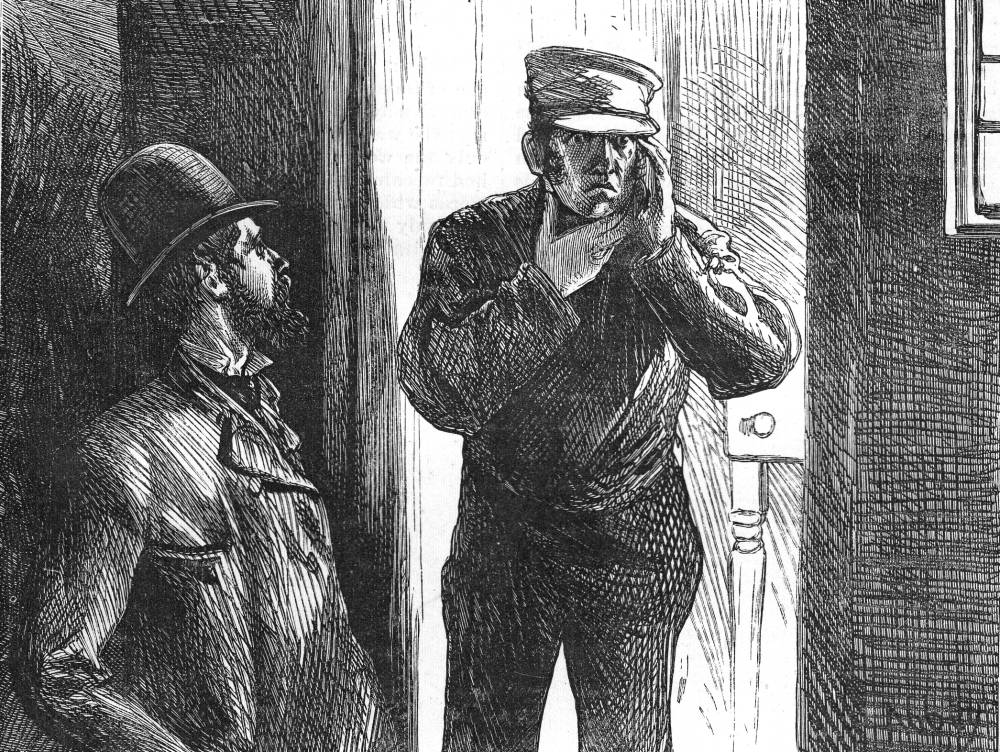
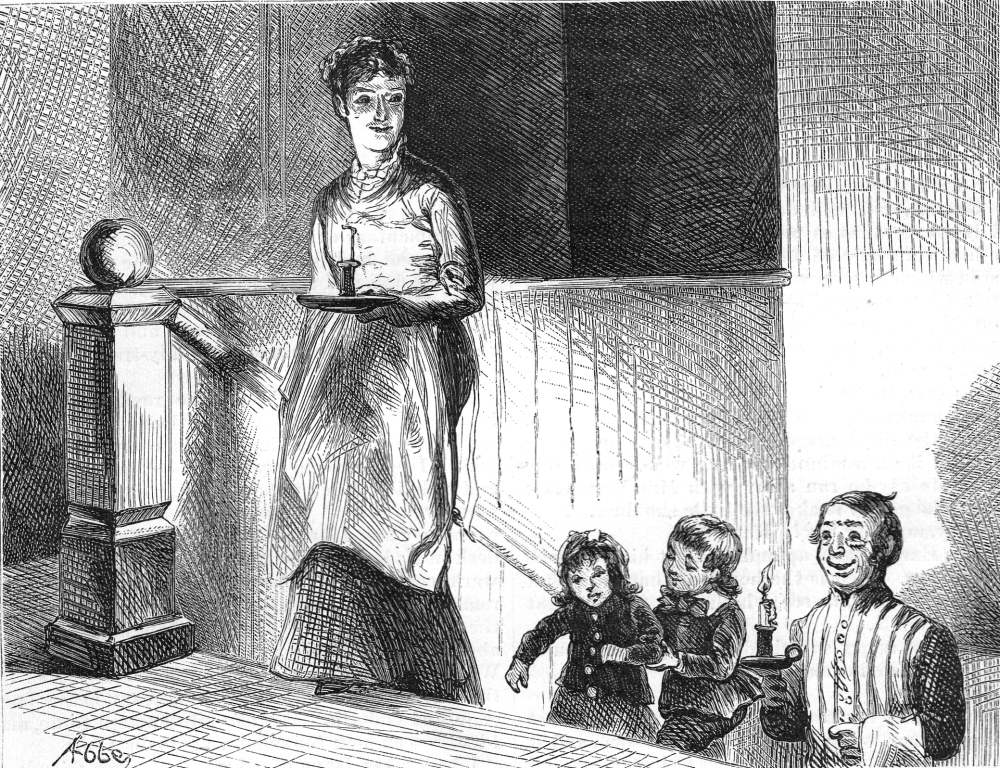
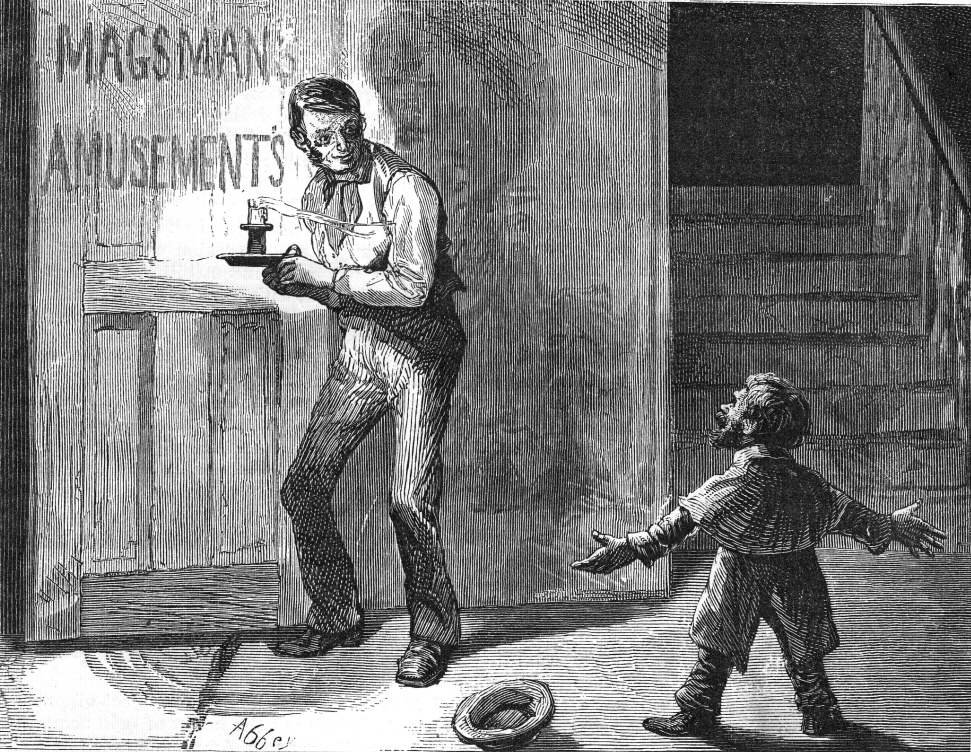
1850: The first "Christmas Number" appeared in Household Words on Saturday, 21 December, 1850, but without any conception of a frame. Dickens's "A Christmas Tree" leads off the number. The other contributors were William Blanchard Jerrold, W. H. Wills, James Hannay, Charles Knight, Frederick Hunt, Jaochim Heyward Siddons, Robert McCormick (in collaboration with Dickens on "Christmas in Frozen Regions"), Samuel Sidney, and Richard Hengest Horne. Note that Collins did not join the staff until the fall of 1856, and that his first significant collaboration with Dickens was the melodrama The Frozen Deep, staged at Tavistock House in January 1857 (see below).
1851: The first "Extra Number for Christmas of Household Words" (24 pages) appeared. Dickens leads off with "What Christmas Is as We Grow Older." Other contributors included Richard Hengest Horne, Harriet Martineau, George Augustus Sala, Samuel Sidney, Eliza Griffiths, Theodore Buckley, and Edmund Olliphant.
1852: A Round of Stories by the Christmas Fire in the Extra Christmas Number of Household Words: framing now becomes evident with nine contributors. Dickens contributed "The Poor Relation's Story" and "The Child's Story." The other contributors included Dickens's subeditEliza Griffithsr, Wills, William Moy Thomas, Edmund Ollier, James White, Elizabeth Gaskell, Edmund Saul Dixon, Samuel Sidney, Eliza Griffiths, and Harriet Martineau.
1853: Another Round of Stories by the Christmas Fire in the Extra Christmas Number of Household Words: Dickens contributed "The Schoolboy's Story" and "Nobody's Story." The other contributors included Eliza Lynn Linton, Adelaide Anne Procter, and George Augustus Sala. "Dickens does not imagine his own stories, composed in Italy, specifically as framing pieces" (Klimaszewski, 55), but his sub-editor, W. H. Wills, places the pair first and last, thereby giving them extra prominence. "For the first time, Dickens's own stories stand as bookends for a Christmas number" (Klimaszewski, 55).
1854: The Seven Poor Travellers in the "Extra Christmas Number" of Household Words (14 December) with Eliza Lynn, Adelaide Anne Procter, and George Augustus Sala. Dickens wrote the first and seventh (final) pieces, and Collins contributed the fourth, "The Fourth Poor Traveller," an early detective story.
1855: The Holly Tree Inn in the "Extra Christmas Number" of Household Words (15 December) with William Howitt, Harriet Parr, and Adelaide Anne Procter. Collins's "The Ostler" is unique in that it it not narrated by the eponymous character, but by the landlord, deviating from Dickens's original conception.
1856: The Wreck of the Golden Mary in the "Extra Christmas Number" of Household Words (6 December) with Percy Fitzgerald, Adelaide Anne Procter, Harriet Parr, and Rev. James White, with Dickens providing the first and third parts of the framed-tale. Collins, who had officially joined the staff that fall, provided John Steadiman's account, "The Beguilement im the Boats," in the second half, "The Deliverance." For the first time, Dickens had asked another writer (Collins) to collaborate with him on the Christmas number's framed tale.
1857: The Frozen Deep, initially performed in the converted schoolroom of Dickens's London residence, Tavistock House, on January 6th; "The Lazy Tour of Two Idle Apprentices" in Household Words (3-31 October); The Perils of Certain English Prisoners in the "Extra Christmas Number" of Household Words (7 December). This is "the first number for which Dickens collaborates with only one other author, Wilkie Collins" (Klimaszewski, 17).
1858: A House to Let in the Extra Christmas Number of Household Words (7 December) with Elizabeth Gaskell and Adelaide Anne Procter.
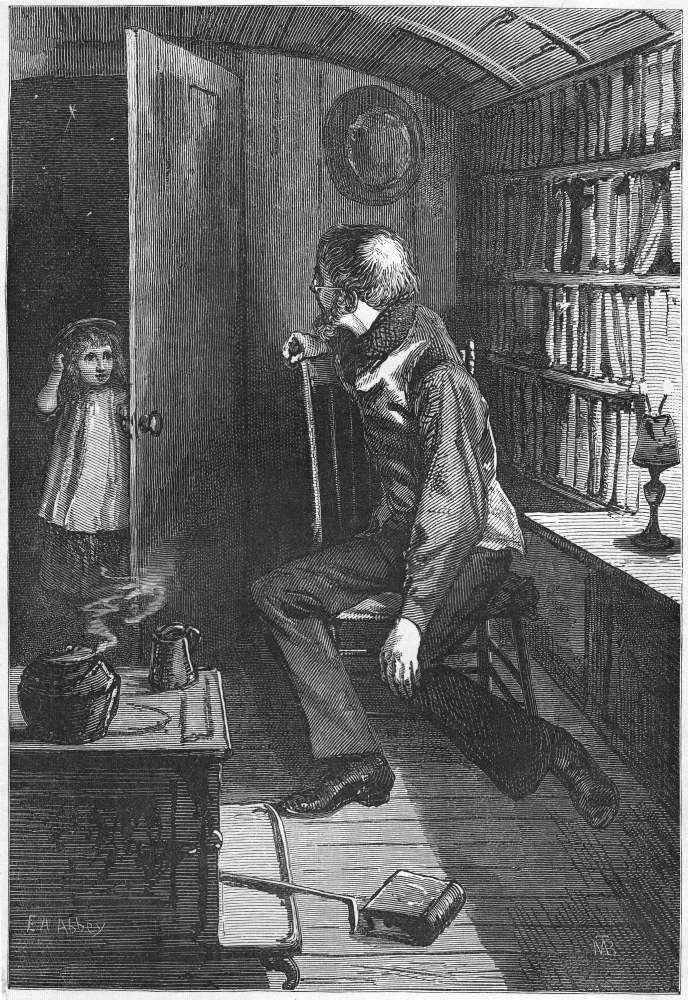
1859: The Haunted House in the Extra Christmas Number of All the Year Round (13 December) with Elizabeth Gaskell, Adelaide Anne Procter, George Augustus Sala, and Hesba Stretton. Dickens contributed two — "The Ghost in Master B.'s Room" and "The Mortals in the House," and Collins the darkest, most suspenseful of the eight pieces: "The Ghost in the Cupboard Room."
1860: A Message from the Sea in the Extra Christmas Number of All the Year Round (13 December) with either Robert Buchanan or Henry F. Chorley, Charles Collins, Amelia B. Edwards, and Harriet Parr. Together Collins and Dickens wrote the first, second, and fifth chapters, that is, "The Village, "The Money," and "The Restitution."
1861: Tom Tiddler's Ground in the Extra Christmas Number of All the Year Round (12 December) with John Harwood, Wilkie and Charles Allston Collins, and Amelia B. Edwards. Again, Dickens provided the opening and closing of the seven chapters ("Picking Up Soot and Cinders" and "Picking Up the Tinker"), and the sixth, "Picking up Miss Kimmeens." Wilkie Collins contributed "Picking Up Waifs at Sea."
1865: Doctor Marigold's Prescriptions in the Extra Christmas Number of All the Year Round. Dickens contributed the opening and closing pieces, "To Be Taken Immediately" and "To Be Taken for Life," as well as Part 6, "To Be Taken with a Grain of Salt." Other contributors included Rosa Mulholland, Hesba Stratton, Walter Thornbury, and Caroline Leigh Gascoigne. Collins was not represented.
1867: Collins's and Dickens's final joint project, No Thoroughfare for the "Extra Christmas Number" of All the Year Round (12 December), did not involve the assistance of any other staff writers. They dramatised the piece at the Adelphi Theatre in The Strand on 26 December 1867.
Bibliography
Davis, Paul. Charles Dickens A to Z: The Essential Reference to His Life and Work. New York: Checkmark and Facts On File, 1998.

Dickens, Charles. Christmas Stories. With contemporary illustrations by E. G. Dalziel, Townley Green, Charles Green, etc. The Oxford Illustrated Dickens. 21 vols. Oxford: Oxford U. P., 1989. Vol. XI.
Dickens, Charles. Christmas Stories. Illustrated by E. A. Abbey. The Household Edition 19 vols. New York: Harper & Bros., 1876. Vol. III.
Dickens, Charles. Christmas Stories. Illustrated by E. G. Dalziel. The Household Edition 22 vols. London: Chap,an and Hall, 1879. Vol. 21.
Dickens, Charles. Christmas Stories from "Household Words" and "All The Year Round." Centenary Edition. 36 vols. London: Chapman & Hall; New York: Charles Scribner's Sons, 1911.
Dickens, Charles. Christmas Stories. With contemporary illustrations by E. G. Dalziel, Townley Green, Charles Green, etc. The Oxford Illustrated Dickens. 21 vols. Oxford: Oxford U. P., 1989. Vol. XI.
Gasson, Andrew. "A Contemporary Victorian Writer: Wilkie Collins." The Dickens Magazine, Part B, Series 1, Issue 5. Haslemere, Surrey, 2001.
Klimaszewski, Melisa. Collaborative Dickens: Authorship and Victorian Periodicals. Athens: Ohio University Press, 2019.
Nayder, Lillian. Unequal Partners: Charles Dickens, Wilkie Collins, and Victorian Authorship. London and Ithaca: Cornell University Press, 2002.
Thomas, Deborah A. Dickens and the Short Story. Philadelphia: U. Pennsylvania Press, 1982.
Watts, Alan S. "Wilkie Collins, Charles Dickens: Collaborators." The Dickens Magazine, Part B, Series 1, Issue 5. Haslemere, Surrey, 2001.
Created 10 October 2005
Last updated 28 January 2026