
This page is updated regularly. Please refresh the screen to see the latest news.
October 2026

he end of last month was an unusually busy time on the website. But before taking a look below, do check in first to see the new conferences and calls for papers with their various deadlines. Note, for example, that a symposium on the circulation of Victorian annuals, Christmas gift books, etc, is due to take place next month at Caen Normandie University. Keep an eye, too, on the books currently available for review (and the guidelines for reviewers). These are regular features, to which there are frequent additions.
Our most recent book review is an informative one by Alyssa Q. Johnson, of Lydia Murdoch's What We Mourn: Child Death and the Politics of Grief in Nineteenth-Century Britain. Murdoch has looked at this kind of peculiarly painful bereavement from a wide perspective, showing how it came to be seen and acted on as an often avoidable tragedy, rather than simply inevitable — as outrage about present-day cases of hospital malpractice all too often reminds us.
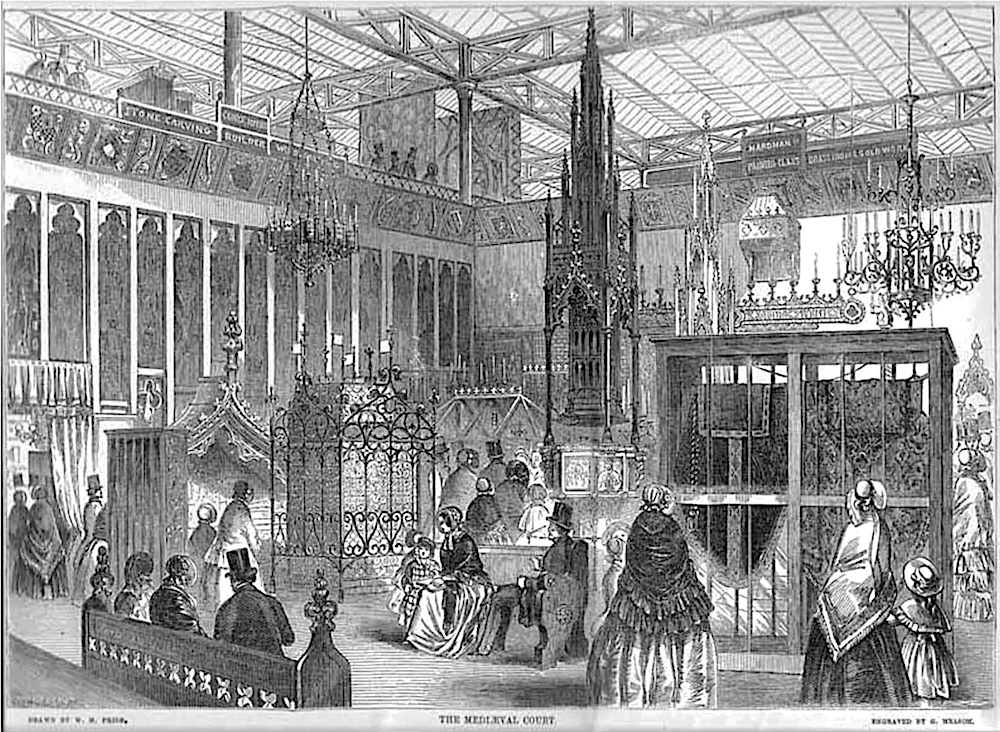
Among much else new work, at the beginning of the month we finalised a substantial article from one of the Pugin Society's earlier publications — a very well-documented paper on "A.W.N. Pugin, Stained Glass, and the 1851 Medieval Court," by Jasmine Allen, Director and Curator of the Stained Glass Museum in Ely. This brings together a major figure, craft and event of the Victorian period: nothing conveys the various ups and downs of the whole project better than Pugin's own words, poured out in his eccentric orthography. Despite all his concerns, the Great Exhibition was, of course, a great success for the country as a whole, and for him personally. "It rains windows," as he said afterwards, in response to the increased demand for his work.
Later in the reign, another highly original architect and designer had a more subtle influence. This was Edward Schroder Prior, and JB greatly enjoyed reviewing David Valinsky's The Architecture and Writings of E.S. Prior: Challenging the Arts and Crafts, with its detailed examination of his highly individualised buildings. Prior's contribution to the stained glass boom, incidentally, was the invention of "Prior's Glass," with its "flickering dancing light." Just a small part of his work, this was nevertheless significant: such experiments set him on the very threshold of a new age in architecture and design.
Also in the visual arts, a major contribution this month comes from our Senior Editor, Simon Cooke: his "Dalziels’ Bible Gallery: An Introduction and Guide" is part of his ongoing project for his next book,which will assemble a full account of the Dalziels' magnum opus. This work was on a truly grand scale, involving major artists of the age from G.F. Watts and Frederic Leighton to John Everett Millais. Surely nothing could better help to restore bible literacy today (a topic much in the news recently) than these powerful illustrations.
Still in the illustrations section, our Contributing Editor from Canada, Philip Allingham, has now completed his work on Phiz's illustrations for William Harrison Ainsworth's utterly over-the-top sensational novel, Auriol; or, the Elixir of Life (1846), starting with a fateful interview in Hyde Park, and ending with a bit of an anti-climax (no spoilers!). This brings us to another piece of encouraging news: the BBC has contacted us for the use of Philip's recently completed work on another illustrator, Fred Barnard, in a documentary.
Yet another project is also coming along well: our Contributing Editor from Poland, Andrzej Diniejko, has just added to his "New Woman Fiction" series with an account of Kathleen Caffyn (Iota)'s life and most successful and controversial novel Yellow Aster. Too frank for some readers, but welcome to many more, this raised important questions about what was truly needed for women's fulfilment. You may or may not agree with the heroine's findings!
Dennis T. Lanigan's revision of our section on the artist Albert Joseph Moore is now complete, with discussions of many additional paintings, drawings and designs. These are eye-opening in their range — from his trademark paintings of women elegantly disposed among flowers or draped on couches (A Summer Night combines both elements), to such comparatively little-known and more lively drawings and designs as these tile designs made up by Minton.
Tim Willasey-Wilsey's photographs of London monuments continue to inspire new accounts of famous figures — behind the equestrian statue of Robert Napier is a tale of immense abilities and fortitude, with a sad footnote involving an orphaned prince made famous by Julia Cameron's photograph of him. Tim also provided us with an early example of the Victorian drinking-fountain initiative, the "Boy with a Pitcher" in St James's Park, by Charles Mabey and Robert Jackson. From outside London, Tim sent in some excellent photographs of the historic and (remarkably) still fully functioning wooden Broomhill Bridge in the Scottish Highlands.
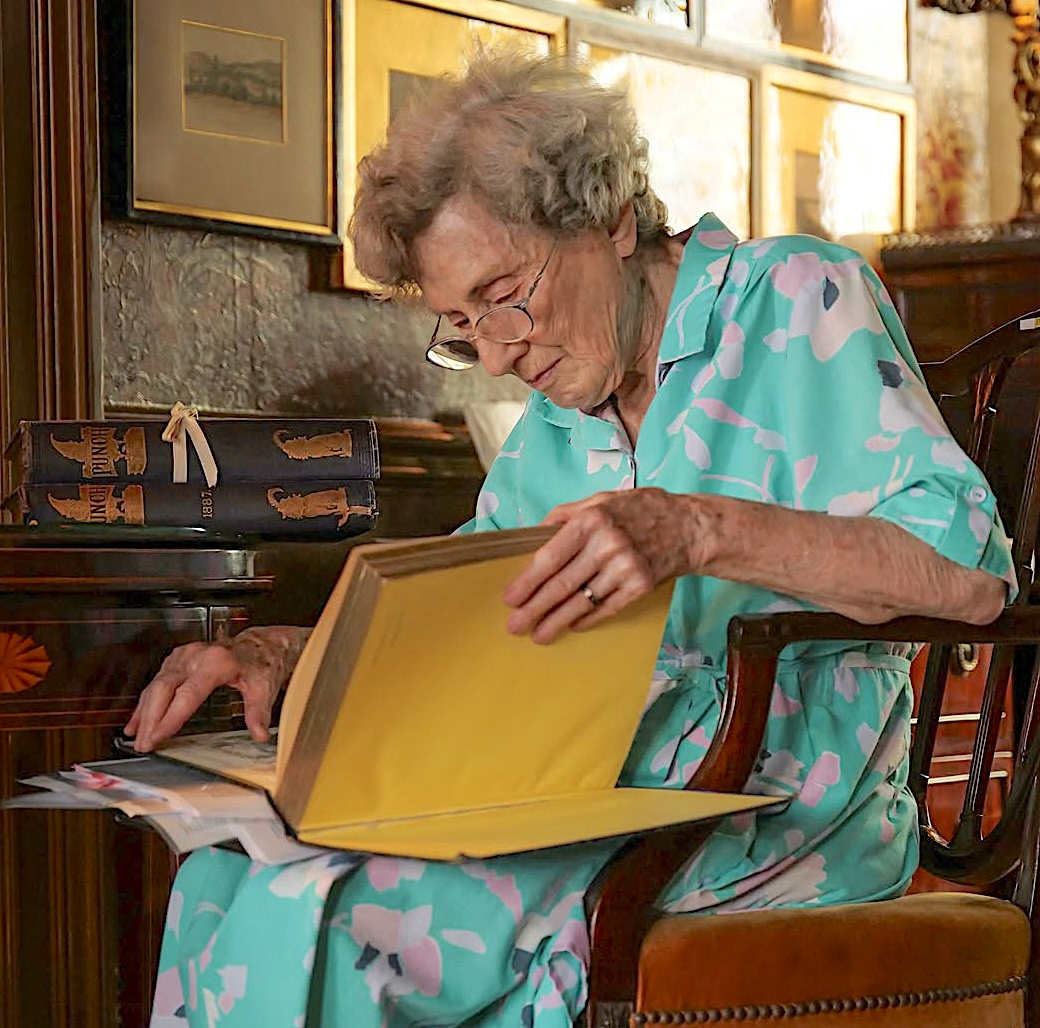
Correspondence: We had some very sad news at the beginning of the month, when we heard that Shirley Nicholson, who contributed to our site over the last five years or so, not least by proof-reading, died quite suddenly but peacefully on 25 September. We send our heartfelt sympathy to her family, who kindly notified us, and remember with gratitude how generously Shirley shared with us her great store of knowledge about Sambourne House, Leighton House Museum, and the Kensington artists' circle. The material and connections that she brought us over recent years are a treasured legacy. But it is so hard to accept such a loss; she is greatly missed. The little picture of her shown here comes, with thanks, from a larger one accompanying Shirley's memorial notice on Leighton House and Sambourne House's Facebook page (2 October).
More recent correspondence, of the more usual kind, has included some pleasant communications with Presidency University, Kolkata, where the alumni are researching the Victorian architect of their main building, William Henry White. We were delighted to learn of their interest. We do try to answer queries, or at least give some pointers to further resources. Note, though, that such resources can usually be found in the bibliographies at the end of individual entries — and giving opinions about the authenticity and value Victorian artwork (yes, we often get such requests) is entirely beyond our scope.
September 2026

eptember, and the shorter days are upon us. The first fruits of the month are some splendid additions to the "Horses in the Victorian Age" section, peer-reviewed under the direction of Kristen Guest (University of Northern British Columbia) and Ronja Charlotte Frank (Memorial University, St John's, Newfoundland), as part of the Equine Breed and the Making of Modern Identity project funded by the Social Sciences and Humanities Research Council of Canada. Topics range from British Cavalry Policy after the Anglo-Boer War, discussed by Chelsea Medlock, and women's equestrianism, discussed by Heidi Mikkelsen, to changes in women's riding habits, discussed by Jordyn Baratta. One intriguing item here was the divided "Hayes' Safety Skirt" for safer mounting: of course, it had to be kept closed when walking....

As usual, there are new items on the conference listing, with one call for papers on the all too timely topic of "Planetary Precarity"; and a whole crop of new book reviews. JB looks at Julia Bolton Holloway's Elizabeth Barrett Browning and Her Circle: Laurel Garland, while our Managing Editor Diane Josefowicz reviews Sarah Bilston's The Lost Orchid: A Story of Victorian Plunder and Obsession. Appealing as they are in other ways, both books, like the "Planetary Precarity" topic, give rise to some troubling thoughts — the former because of its insinuations about Robert Browning, and the latter because it draws attention to the human and environmental cost of orchidomania. Even more disconcerting is the last part of a review by another of our editors, Jo Devereux: this fine scholarly assessment of Laura Fox Gill's John Milton in Nineteenth-Century Literature and Visual Culture ends with some ghoulish details which many of us would probably prefer not to have known!
Coming in later in the month, Rebecca Nesvet's lively and dramatically titled "Release the Kraken! A Review of Richard Holmes's The Boundless Deep: Young Tennyson, Science, and the Crisis of Belief has its own disturbing resonance. Holmes is always eminently readable, and despite finding some scope for improvement, this review is overwhelmingly positive ("a wonderful, essential book"). Elizabeth Steere's review of Theatrical Afterlives: Nineteenth-Century Women's Novels on the Stage is equally enthusiastic about the way Marina Cano shows stage adaptations bringing fresh insights into a whole range of Victorian novels, from East Lynne to Cranford, exposing "concerns, sympathies, and values present but not overt in the source text." Particularly welcome here is the inclusion of amateur performances, which can often offer surprising perspectives on familiar texts.
Turning to the visual arts, and Tim Willasey-Wilsey's new photographs and useful research leads, JB was able to write about one of Alfred Waterhouse's later works. This was the pioneering Lister Institute (now the Lister Hospital) on Chelsea Bridge Road, with its complex history and noble aims: it was the first medical research charity in the country. Tim also sent in a fine set of photographs of the Carabiniers (6th Dragoon Guards) Memorial nearby on Chelsea Embankment. As it happens, both have some relevance to the "Horses in the Victorian Age" project, since horses were used in medical research as well as warfare. There is no escaping the darker side of life in Victorian England.
Meanwhile, in the illustrations section, our Senior Editor Simon Cooke has been busy working on his Dalziels' Bible Gallery project, with new essays on Thomas Dalziel, Edward Dalziel and E. F. Brewtnall. As for the Dalziel Brothers, we tend to discuss them together, but, from the illustrations selected here, it is clear that they amply repay individual attention. Disentangling the "Dalziel Brothers" not only from each other but from Edward's son, Edward G. (Gurden) Dalziel, has been tricky, to say the least, and Simon is now working on a longer account of the Bible Gallery which will bring all his new material together.
The illustration section also sees new work by our Contributing Editor, Philip Allingham, on Arthur A. Dixon and his illustrations for the Collins Pocket Classics edition of The Tale of Two Cities, Little Dorrit, and others — this took time, partly because Philip made a detour to update Sol Eytinge's illustrations of the latter. He has also been working on Phiz's illustrations for Charles Lever's novel Barrington, a sequence which he first put online in 2002! Updating is essential if a long-established website like ours is to keep up with advances in technology and scholarship. Adding new material is only one part of the story.
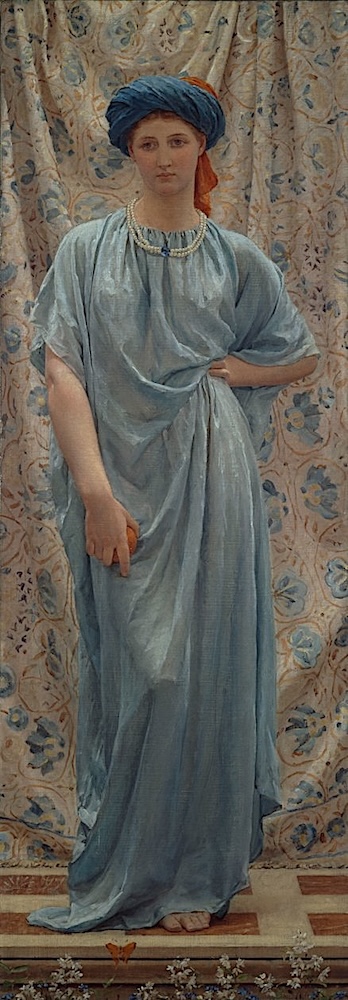
Still in the visual arts pages, we're happy to report that our hardworking art historian, Dennis T. Lanigan, is also updating older work as he adds to our section on Albert Joseph Moore — one of his favourite Victorian artists. We now have some of his choicest works in colour, rather than the original monochrome, and many new works, including the beautiful shimmering Sapphires. As usual, we're grateful to Scott Thomas Buckle for reading the commentaries and making helpful suggestions. Here again, there are many more works still to be included.
Cheering us along in all this is Sylvia Hornsby's new discussion of the novelist George Meredith’s sense of humour. While his essay on the "Comic Spirit" became a classic of its time, his own deployment of "thoughtful laughter" tends to be neglected, especially in novels other than The Egoist, and Sylvia has selected some excellent instances of it in these other works, including One of Our Conquerors. The subject inspired JB to look up two Punch cartoons of the 1890s, making fun of Meredith's notoriously difficult style — examples of "thoughtful laughter" in the magazine's own inimitable style.
We were delighted to receive some photographs from George Michaels of two family heirlooms shown on the TroveStar website: an exquisite presentation casket in silver and chiseled steel by Alexander Fisher, and a drawing for a stained glass window (St Paul Preaching at Athens), one of a series of celebrated windows in St Paul's, Morton, Lincolnshire, by Sir Edward Burne-Jones.
Correspondence: Many thanks to Faith Stanley for informing us about a domain change for Liverpool's mercantile heritage site, so that we could update our links to it. Here's another kind of input that we greatly appreciate. Penelope Harris writes to inform us that her new book on the architect Joseph Hansom will be available from 1 October at a "more sensible" price (to be precise, £36.19 instead of the originally planned £50.00) — fans of Pugin will find much to interest them in it. See Joseph Aloysius Hansom (1803-82): An Unfortunate Genius.
August 2026
or many of us, this turned out to be another month of record-breaking heat. We have even found ourselves hankering after those rainy days at the seaside featured in Punch cartoons! Still, work continued here, and some brilliant new projects started.
As usual, do check out the new conferences and calls for papers in our list. Several have deadlines coming up in the autumn. One that may tempt you is on the theme of design, for the 35th Annual 18th- and 19th-Century British Women Writers Conference: the scope here is huge, from the visual arts to literary forms to course and syllabus design. That last suggestion will be especially interesting for those of you looking forward to an academic career.
As for new work on the website, thanks, first, to Judith Al-Seffar of the Pugin Society and Rev. Paul O'Connor of the Birmingham Diocesan Trust, for photographs of the Church of St Thomas and St Edmund, Erdington, designed by C.F. Hansom with much interior work by A.W.N. Pugin. A new entry on this was followed by second, this time on an elaborate altar and reredos by Hansom, and then an account of another of his churches in which Pugin did the internal furnishings, the Church of Our Lady and St Alphonsus, Hanley Swan. Many thanks again to Deacon O'Connor for his excellent photographs. It is high time we included C.F. Hansom, who is generally overshadowed by his more famous brother, J.A. Hansom; and the churches themselves, with their monastic connections, have fascinating histories. Inspired by these histories, JB opened a new section on monasticism in the nineteenth century, with an introduction to it (again with useful input from Deacon O'Connor).

On topics that are part of this wider context, we have new book reviews that give insights into the intellectual ferment of the age. John P. Farrell's review of Writers and Revolution (2021), praises the way Jonathan Beecher explores and elucidates the complex responses of the most important French writers, including George Sand, Victor Hugo and Karl Marx, to the political upheaval on that side of the Channel. The review itself is usefully illuminating: Britain may have avoided the same kind of upheaval, but its reverberations were felt on this side of the Channel as well. Carol Senf's review of Janet Browne's Darwin brings home to us the extent to which Darwin too sent waves through the intellectual and spiritual life of the age. Browne's success in keeping the personality of the man himself in focus also becomes clear — did you know, for example, that Darwin was an animal-lover, and worried about the treatment of laboratory animals? Thanks as always to our Managing Editor Diane Josefowicz, for running our increasingly important and scholarly book review section.
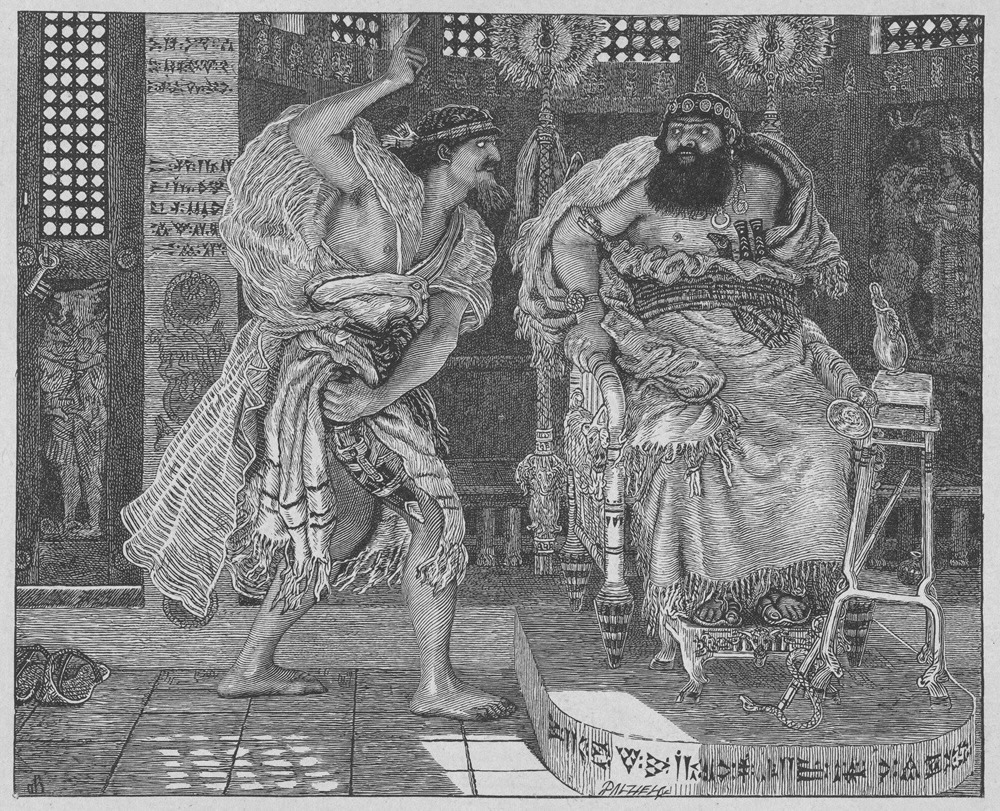
The first of this month's bigger projects to get underway is our Senior Editor's: Simon Cooke has been writing about the very special artwork in the Dalziels' Bible Gallery, with more than sixty plates by such major artists as Ford Madox Brown (for example, look at his dramatic Death of Eglon) and Frederick Leighton (whose Samson and the Lion really stops you in your tracks). Another of the illustrations, Haman Supplicating Esher, is by an artist who is new to us, E.F. Brewtnall, briefly introduced here. There's more to come for Brewtnall, and much more to come for the Dalziels' unique book.
Simon has also been keeping up with the latest art exhibitions: the first to come in was his thought-provoking review of Richard Dadd – Beyond Bedlam at the Royal Academy, London, 25 July–25 October, 2026. This might encourage you to look at Dadd in rather a new light, or at least to recognise "the continuum between Dadd Not Mad and Mad Dadd." Simon then visited and reviewed James McNeill Whistler at Tate Britain (21 May–27 September 2026). Here too the emphasis is on seeing the oeuvre as a whole, tracing continuities, here especially the daring, controversial development towards Aestheticism and abstraction. Only one disappointment at the Tate — the absence of a key work, Nocturne in Black and Gold: The Falling Rocket. Otherwise, this is another five-star review, making a visit to the capital altogether irresistible.
Another big project, still ongoing, is the revision of the work of Albert Moore in the painting section, as Dennis T. Lanigan adds commentaries, improved images, and many new entries to our large section of this artist's work. As a taster, take a peep at the new page on Moore's Azaleas. Moore has so much to recommend him (especially his love of flowers and music), and since Dennis admits to being a particular fan of his, this promises to be a rare treat.
Back in the illustrations section, and involving new work on Edward Bulwer Lytton's aptly entitled A Strange Story, are some illustrations from a pirated edition of the novel, like this stagey one by F. O. Freeman, of a disappearing spook. Dealing with works like this, illustrated by different people, can be complicated, and A Strange Story was no exception. Philip has been helping, too, with updating and repairing links in older documents. All such help is greatly needed and very much appreciated.
From Yifu Xing, a young scholar with a special interest in the emotive topic of child labour, comes a useful bibliography for the subject. Yifu has already visited the National Archives at Kew, and is currently preparing a much larger online resource for those researching the transformation of working-class childhood in Victorian times.
Education was, of course, a vital aspect of this transformation. This month we have also expanded our section on pedagogy, with Philip Allingham pitching in here too to assemble at least a selection of our material on it. We hope that this will be useful to teachers and students alike. The new sitemap was inspired by an essay, "Why Jane Eyre?" by Derek Furr, a literature professor and Dean of Teacher Education at Bard College, examining the pros and cons of teaching a text "from the ascendency of the British empire, one with a rich critical heritage and the burden of canonicity." These are important and highly relevant considerations at a time when the humanities are under unprecedented pressure.
Correspondence: Thank you to Euwyn at a Web Editions reader for pointing out that the whole text of Thomas Huxley's key essay, "Agnosticism," is available there in proofed and annotated form. A link has been added to the appropriate page, along with a link to the essay as it first appeared in the periodical Popular Science Monthly in 1889.
In turn, we were pleased to hear that our pages have been useful to those at Senate House, London, as they prepare for this year's Open Day, London (yes, we do feel that this is a proper educational use of our photographs!); to Howard Leader, assistant editor of the Phoenix Newspaper in Birmingham, again for the use of architectural images; and to John Bedder-Green, of Scarborough Gallery, for permission to reproduce an image of Sir Joseph Noel Paton's Man of Sorrows for an information label or panel. We are not a free photo gallery, but where there are no copyright problems, the cause is good, and full credit is given, we are happy to help with such projects.
Thank you also to Pamela Gerrish Nunn for updating her essay on Edith Martineau and Aestheticism in light of a recent re-attribution: Pamela was glad to be notified of this directly by one of our readers. Just a reminder here that Pamela is the curator of the upcoming exhibition of Pre-Raphaelitism Female Paths, 1850-1914 at the Recoletos Hall, the Mapfre Foundation, in Madrid (24 September to 10 January 2027). A city break for the autumn perhaps?
July 2026

uly opened quietly with long hot days; halfway through the month, the promise (or threat) of more to come has already been been amply fulfilled. Take a moment, if you can, to check out the latest conference listings: a new one on "Keywords in Religion and Victorian Studies" has a deadline for abstracts coming up on 25 July. But this may be the time to sit back and listen to our latest podcasts or take a look through some of our galleries. Here are a few suggestions: flower-patterned tiles designed by William De Morgan; furniture designed by Charles Rennie Mackintosh; and John Tenniel's illustrations for Alice in Wonderland. Click on the images to enlarge them and find out more about them.
From the Pugin Society's publications this month, we reprint an article on A.W.N. Pugin's contributions to Gawthorpe Hall in Lancashire, written by the Site Supervisor, Rachel Pilling. The Hall's refurbishment by Charles Barry and Pugin would have been underway when Charlotte Brontë went to stay with the Kay-Shuttleworths there in March 1850: it is fascinating to think that she might have heard the two architects' work being discussed during her visit. She certainly appreciated the Hall's "picturesque" appearance. As for us, we appreciate the generosity of both the Society and Rachel herself for sharing this piece with us.
As usual, we have several new projects in hand. JB offered an overview of the Victorians and Nature, drawing together ideas covered in many different areas of the website, from urban and suburban amenities to plein air painting and growing ecological concerns, as it became apparent that, to quote from William Morris's News from Nowhere, we could no longer see "everything, except mankind, animate and inanimate — “nature”, as people used to call it — as one thing, and mankind as another." In quite a different area, JB also added an account of the Indian architect, Ram Singh, and his work on the exotic Durbar Hall at Osborne.
At the suggestion of our managing editor, Diane Josefowicz, JB brought in a little contemporary material on two influential Punch editors — Mark Lemon and Frank Burnand, so that they could be incorporated in our list of selected periodical editors and contributors. Who else should be there? Do let us know if you have any suggestions.

In the painting section, Dennis T. Lanigan has now completed his thorough revision of the large section on the artist Sir Frank Dicksee, wherever possible replacing older monochrome images from magazines in the Internet Archive with colour ones now available from Art UK and elsewhere, and adding many more works, with useful commentaries. Here for example is the much-improved entry for one of his best-known works, Harmony, fourteen years after it was first put online, with the "glow of warm light" (as one art critic described it at the time) apparent at last. Having been subjected to Thomas Scott Buckle's critical eye, and enriched by some of his suggestions, this project is now complete. It does justice at last to one of the pre-eminent Pre-Raphaelites.
Similarly, our contributing editor from Canada, Philip Allingham, has now completed his revision of John McLenan's illustrations for Edward Bulwer-Lytton's best seller, A Strange Story. If you don't know it you'll be able to follow along through the illustrations, each of which has now acquired a "passage illustrated" section and a commentary. Here for instance is the "enigmatic occultist Margrave" who apparently possesses the secret of eternal youth. Unfortunately, McLenan's illustrations for the serial in Harper's Weekly peter out before the ending, but Philip kindly provides the relevant grisly details from the text, at the end of the final illustration. You have been warned! Philip is now well into an overhaul of his section on Felix Octavius Darley, with helpful commentaries on illustrations like this one in Dickens's A Tale of Two Cities, "Ennobling rather than conveying accurately Dickens's image of the September Massacres" — again, despite Darley's angle on it, rather disturbing.

On quite a different note, Tim Willasey-Wilsey sent in a particularly fine photograph of the carved overmantel of Bradford Town Hall's Banqueting Hall. This is an amazing piece of work, not easy to access but often commented on, and a testimony to the skills of the last partner in the celebrated Earp, Hobbs & Miller firm of architectural sculptors. Tim was there to give a talk at a literary festival, and we very much appreciate his thinking of us then.
Indeed, we never know where new submissions will come from next: early this month we received a very interesting piece from history buff Vivekanand Singh, from Ballia, Uttar Pradesh, India, about the Telegraph Memorial in Delhi, alerting us to the historical background and role of the new telegraph system in the Sepoy Rebellion of 1857.
This month, too, we are very pleased to offer a new full-length article, entitled "'You shall give me your signature to a little bill': Bills of Exchange and Promissory Notes in Victorian Fiction." This is by John Paschetto, a transactional lawyer with a particular interest in the history of bills and notes, and in how various novelists employed them in plot and character development. Giving insights into works as diverse as George Eliot's and Sir Arthur Conan Doyle's, and (for example) correcting a misreading of a passage in A Christmas Carol, this unusual approach turns out to be truly rewarding — at least for the readers!
Correspondence: We were delighted to hear from one of our contributors, Penelope Harris, that her new book on the architect (and inventor of a certain kind of conveyance) Joseph Hansom is coming out in the autumn from Unicorn: check out Joseph Aloysius Hansom (1803-82): An Unfortunate Genius. Keith Wood writes to report the latest additions to his ever-expanding Great Exhibition simulation project, so you might also like to take a look now at Prince Albert's model dwellings, displayed just outside the Crystal Palace — all the more impressive when you know that these were later moved to Kennington and can still be seen there, albeit with some modifications.
Special thanks to practising architect John Bowmer, who wrote in to correct some confusion of architectural features on blocks of flats opposite each other near the Royal Albert Hall (Albert Hall Mansions and Albert Court). We greatly appreciate such input. Thanks also to Bernard Richards, Emeritus Fellow of Brasenose College, Oxford, and an old friend of our founding Editor-in-Chief, George Landow, for sending in an appreciative comment on our "enormously useful" site. That makes all our work worthwhile!
June 2026

ummer came at last, much too hot for some, but hopefully with a bit of free time on the horizon. So do check out the latest calls for papers, and the latest additions to our list of books for review, and see if anything appeals. Note that the deadline for one of the former, on the theme of "Dickens and Family," has now passed, as has the "Whistler in Action" conference/symposium at Tate Britain, with its enticing presentations, for example, on "Whistler and Music," "Whistler and Abstraction," and one on the Japanese curtain in Whistler's famous portrait of his mother. On the other hand, the deadline for paper proposals for the Women and/of the Empire(s)" conference at the University of Porto has been extended to 15 July. So don't miss anything that might be of interest: keep up to date with us!
Society news: we're very happy to include Dr Gerard Hyland's biography of a new architect, George Coppinger Ashlin, from an earlier issue of the Pugin Society's journal True Principles. A.W.N. Pugin's own prominence in architectural history is now assured, but perhaps few realise even today the full impact and legacy of the Pugin dynasty and its collaborators. Catriona Blaker, also of the Pugin Society, kindly contributed a photograph of (and information about) the stained glass window in the Oratory of the Ashlins' home, featuring Ashlin himself and his wife and child.
Following on from an earlier foray into the religious section, JB added some work on the Victorian hymnologist Frances Ridley Havergal, whose portrait was already online, and her best loved hymn, "Take My Life...". Then, on a much more worldly and, as it turned out, sensational topic, she wrote about the luxury steam yacht Gunilda, a famous but ill-fated example of late Victorian naval architecture, which met its doom in Lake Superior under the captaincy of an American millionaire: quite a saga. Looking through old issues of the Illustrated London News, she also spotted and added to the website two reports of the opening of new railway stations: Broad Street Station in London (gone now, despite John Betjeman's pleas), and New Station Birmingham (superseded most recently by one that perhaps pays tribute to the original).
Philip Allingham has now concluded his work on Hugh Thomson's illustrations for Emma, despite recent ill health. One of the latest gives an animated glimpse of the garrulous Miss Bates. Philip is our longest-serving contributing editor: happily, he feels much better now, and is busy providing larger and sharper scans for some of his earliest work, and starting to prepare a paper for John Drew's Dickens seminar at the University of Buckingham, to be held live and by Moodle next term.
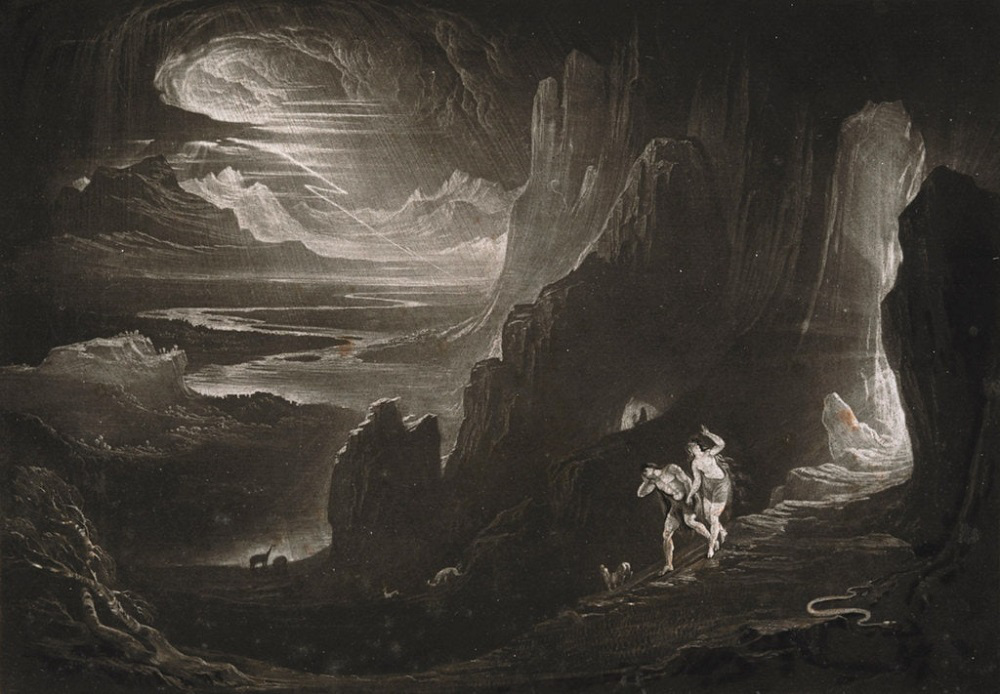
Some other new projects were completed at the beginning of the month. As well as a short piece on Randolph Caldecott's postcards (popular with adults as well as children) our senior editor, Simon Cooke, wrote a a substantial and revealing essay on early film. He argues convincingly that it evolved not so much from Victorian theatre as from the Victorians' pictorial imagination, so amply expressed in their illustrated magazines, books and, of course, paintings (shown above right is John Martin's dramatic take on the expulsion of Adama and Eve from Paradise). Simon exploits our website's potential to the full here, gathering numerous parallels in support of his argument. Since many of his examples link to individual commentaries offering further analyses, this provides both a wide-ranging and an in-depth study of his subject. Simon also provided an article about the rather "shadowy" but clearly very gifted Arthur Murch, and his Biblical illustrations for the Dalziel brothers' Bible Gallery. Rescuing such artists from oblivion is as valuable as offering wide-ranging overviews of whole movements, and we are lucky to have a senior editor who excels at doing both. It seems very sad that so little survives of this particular artist's work.
Another extensive study, dealing with the life and work of Vernon Lee by a more recent contributor, Rita Severi, is also complete now. For Lee, a challenging and prolific late Victorian author, we at last have an index page (or sitemap) with a useful bibliography, mainly assembled by Rita; Rita's own biographical introduction, "Vernon Lee: A Life of the Mind"; an account of Lee's important friendships in Italy; and a discussion of her only play, Ariadne in Mantua — giving us for the first time some wonderful entries into a complex life and oeuvre.
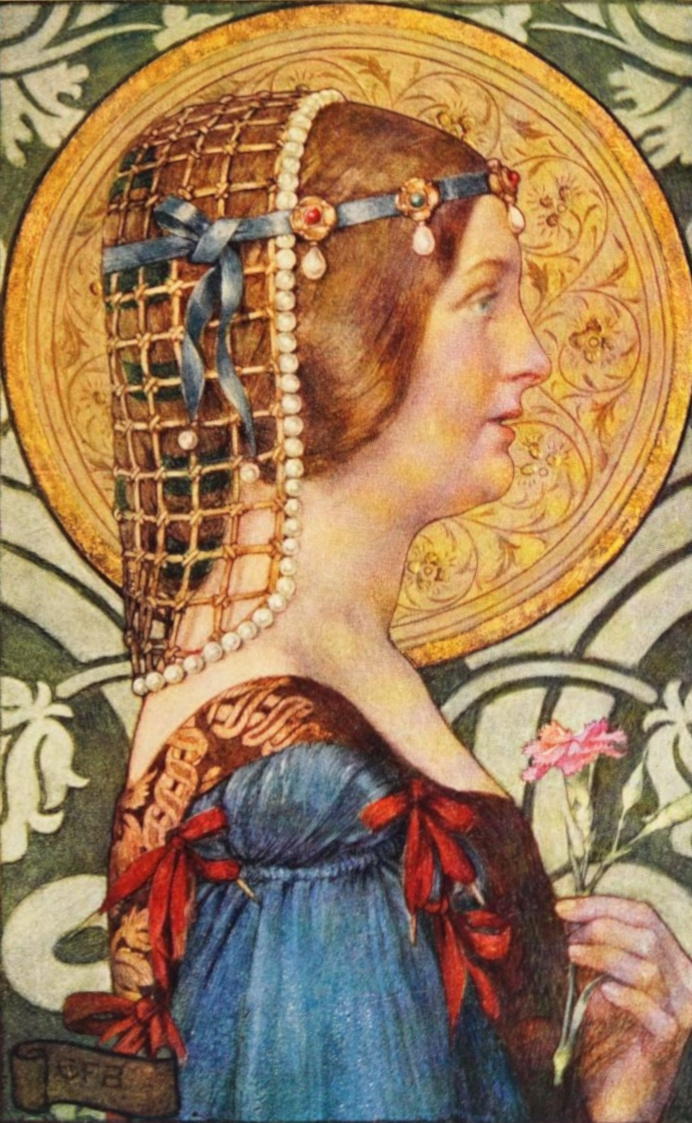
We were so pleased, too, to have a new essay from Pamela Gerrish Nunn, on Eleanor Fortescue Brickdale's captivating illustrations for two volumes of Browning's poetry. JB took particular pleasure in giving some literary background to these, and drew on one of Pamela's books in writing about one of the paintings mentioned in the essay, The Forerunner. But Pamela is the authority on this artist and (again to our delight) will be writing about some more of these paintings for us. As usual, watch this space!
Correspondence: Professor Grosjean wrote in about his recent work on the firm of Cox & King, which (among much else) designed some of those fabulous luxury yachts of the later nineteenth century — links to his work can be found in the bibliography of the account of the Gunilda, mentioned above. From Alastair Carew-Cox, whose brilliant photography can be seen in various places in our stained glass section (e.g. in the review of William Waters' majestic trilogy of books on Pre-Raphaelite stained glass), comes a crowd-funding request for a new volume, The Expression of Thought & Emotion, William Morris as Stained Glass Designer. Here is a worthy project if ever there was one [outbound link]. Then, good news from another contributor, Penelope Harris, who writes to say that her book on the architect Joseph Hansom will soon be published by Unicorn. John Hudson Publishing also announces a forthcoming publication on architecture: James Bettley's wide-ranging English Churches in Europe: An Architectural and Social History (details here, offering a reduced rate to subscribers).
Talking of "wide-ranging," Malcolm Shifrin brought to our attention the link to the Victorian Web on his own website for Victorian Turkish Baths, which emphasises our own range: "For example, the sections on the use of iron in architecture, railroad stations, sculpture, and painting have examples from Austria, Australia, the Czech Republic, France, Germany, Hong Kong, Hungary, India, Italy, Malaysia, Nigeria, Portugal, Vietnam, and the United States; and the section on Aesthetes, Decadents, and Symbolists ranges particularly widely" [outbound link]. Thank you, Malcolm, for recognising the Victorians' (and our) global reach!
May 2026
ay opens with a good variety of new work already on offer, thanks to a busy period at the end of last month. On the book review front, now being so ably dealt with by our Managing Editor, Diane Josefowicz, we have a wide-ranging review article by Rebecca Nesvet, aptly entitled "Treasure at a Small Price: New Studies of Victorian Penny Fiction." This focuses on Manonn Burz-Labrande's new book, Penny Dreadfuls: The Circulation Patterns of a Victorian Popular Genre, but surveys the whole range of scholarship on this subject — and traces later manifestations of it, and its hold on us. Did you know, for example, that "Penny blood" and "dreadful" collecting began to gain popularity during the First World War?
The first fruits of our very welcome link with the Pugin Society are also in: an article by Catriona Blaker on a possible link between Pugin and the Tractarian writer Isaac Williams; and Judith El-Seffar's update on the controversy surrounding Victoria Tower Gardens, with its unique view of Barry and Pugin's Palace of Westminster.
In another area, JB has taken a look at the unusual case of William Quilliam, and the late-Victorian converts to what was then apt to be called "the church of Islam." Views of a visitor to "services" at Quilliam's pioneering institute in Liverpool are recorded, as is Quilliam's rather sorry fate, and the way that the influx of immigrants, from India particularly, soon substantially increased the number of Muslims in the population. In other sections, JB restored W.E. Henley's famous poem, "Invictus," unaccountably missing, and added his poem in memory of Margaritæ Sorori: "A LATE lark twitters from the quiet skies...," with very brief comments on both; added new images and commentaries to the Hospital for Consumption and Diseases of the Chest at Brompton and its chapel, and also brought in a new entry for the major late Victorian/Edwardian architect, Sir Charles Nicholson.
Meanwhile, our contributing editor from Poland, Andrzej Diniejko, was writing about quite a different religious initiative from Quilliam's, that of Ellen Ranyard ("L.N.R."), whose Bible Movement so successfully combined missionary efforts with district nursing in an organisation which spread as far as India, Japan, China and Korea, and had a lasting influence on public health systems. Here was another sign that the making of our modern "global world" was well underway in Victorian times.
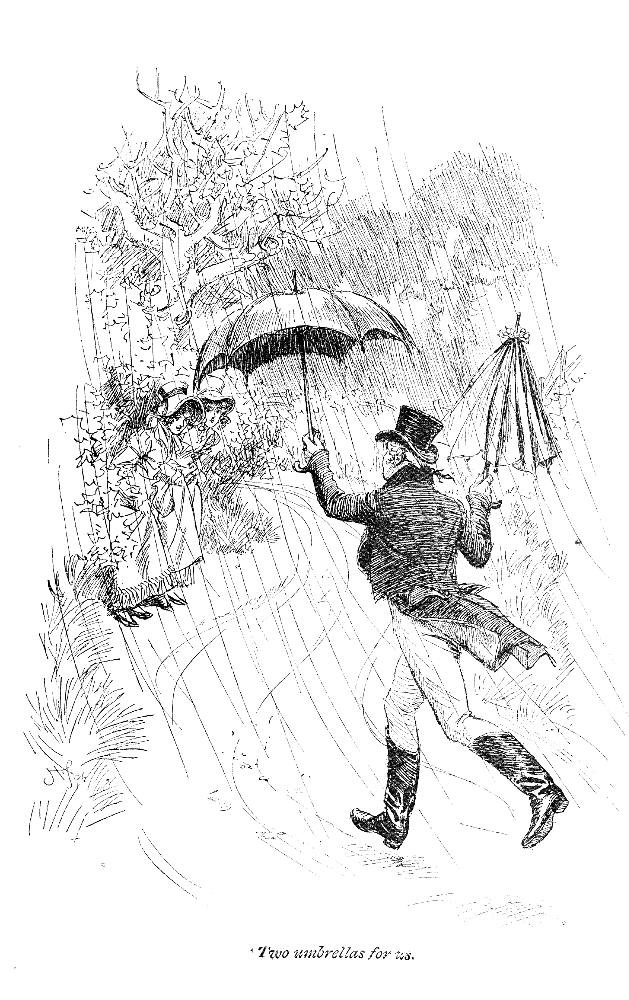
Philip Allingham, our contributing editor in Canada, has almost (but not quite!) deserted Dickens to add a series of Hugh Thomson's appealingly delicate illustrations for Jane Austen's Emma, quite different in style from C.E. Brock's illustrations for the same novel — witness his depiction of an almost balletic Mr Weston hurrying through the rain to bring Emma and Miss Taylor umbrellas. This sequence was interrupted by a hospital stay for surgery, but fortunately all went well. Before going in, Philip did manage to update scans and commentaries for H.M. Brock's illustrations of Great Expectations: here's Mr Jaggers communicating to Pip and Joe that Pip indeed has a benefactor. But of course, they don't know the benefactor's identity! Talking of identities, dealing simultaneously with the two Brocks (father H.M. and son C.E.) has been quite tricky. We look forward very much to having Philip back at his desk again!
And there was another possible source of confusion, too: Dennis T. Lanigan contributed a series on the artist Edward Robert Hughes, nephew of the better-known Arthur Hughes. The younger Hughes' portrait by Frederick Hollyer, one of the major photographers of Victorian celebrities, suggests that Edward lacked something of his uncle's spirit, but we soon see examples of his work that are appealing (A Young Beauty) and challenging ("Oh What's That in the Hollow"). A large sample of Hughes's works is now online (including the memorable Night with Her Train of Stars), kindly checked by Scott Thomas Buckle — whose detective-work on the artist's portrait proved indispensable.
Thank you to Tim Willasey-Wilsey for sending in photographs of London hospitals, prompting new accounts of the General Lying-in-Hospital (as it once was) near Waterloo, and of Sir Charles Nicholson' rather spectacular Royal Waterloo Hospital for Children and Women (now converted to student accommodation for the University of Notre Dame's branch in London). Nicholson was the son of one of the founders of Sydney University, as well as its first chancellor. Interesting also was the portrait of Nicholson as a young man: the artist, Herbert Arnould Olivier, was Laurence Olivier's uncle. Talent runs in families, and sometimes manifests itself in quite different ways!
Happily, Pamela Gerrish Nunn was inspired by the ongoing "Horses in the Victorian Age" project in our history section (do check this out), to write about Jemima Blackburn's depictions of horses. Blackburn really does deserve special attention for these, as well as for her marvellous bird and beast paintings and illustrations. Two of the new works discussed in the piece, The Horse and his rider hath He thrown into the sea, and Jess in Her Stable, are especially fine.
Correspondence: We're very grateful to the Casimir Lewy Library team at the University of Cambridge Library for notifying us of broken links in our version of C.L. Ten's Mill on Liberty. In fact, a whole chapter from this (one of our very earliest VW Books) had gone astray. JB scanned and formatted Chapter 3 again, in the hope that students who come to the book through the CUL Philosophy's digital resources will now find it more useful.

We were also delighted to hear of the upcoming exhibition of William De Morgan's ceramics in picturesque Moreton-in-Marsh, in the Cotswolds: 140 of these wonderfully quirky pieces will be on display, lent by a number of private collectors, making it the largest exhibition of his work in recent years. If you ever wanted an excuse to visit the Cotswolds, well, here it is!
April 2026
pril brings good news of a link with the Pugin Society, founded in 1995, just a year after our own website entered the internet. This long-established, very active and friendly society celebrates the work of A.W.N. Pugin, the most influential and inspiring of Victorian architects and designers, and its publications attract contributions from a range of well-known architectural historians and enthusiasts. Thanks to current committee members for facilitating this. We look forward to a long and fruitful association with the Society.
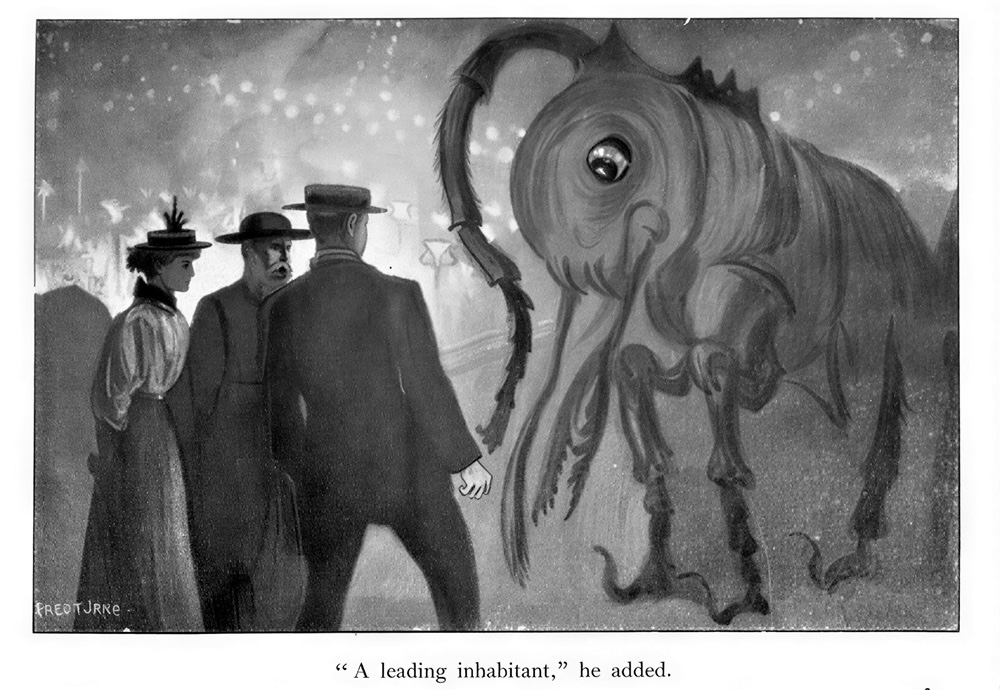
On a more topical note, April started with a space mission, foreseen with varying degrees of credibility by the illustrators of early "science romance." Our Senior Editor, Simon Cooke, continues to add examples of their work. We were relieved that the real astronauts didn't spot anything on the other side of the moon quite as extraordinary as the creature encountered by these fictional ones in the illustration on the right by Fred Jane!
Anyone looking for an excuse to travel a bit nearer home, and present their own latest research and hear others', should check out our latest conference listings. One conference, for instance, is at the University of Porto, on "Women and/of the Empire(s): On the 150 Anniversary of Queen Victoria's Proclamation as Empress of India (1876-2026)." Then, there's a new call for "Expressions of interest" from those who would like to participate in a centenary Israel Zangwill Roundtable.... Note that the deadline for submissions for "The Incredible Nineteenth Century: Science Fiction, Fantasy, and Fairy Tale" passed earlier this month, but you can still register to attend (on 1-2 May) by Zoom.
Firmly on earth, or at least on the beach, JB has been exploring a couple of the seaside resorts which sprang up and flourished in Victorian times. These developed a range of cultural assets, from piers designed by Eugenius Birch, to public sculpture and architecture by leading practitioners. Eastbourne Pier, frequented by Lewis Carroll, is one example; elevated in a different way is G.E. Street's impressive St Saviour's Church in the same resort, with its pleasing proportions and inspiring interior, including mosaics and painted decoration by top craftsmen. Many thanks to Contributing Photographer John Salmon and others who added some fine views of the church. Sir William Goscombe John's seated statue of the Duke of Devonshire is another example of Eastbourne's prominent artworks. Later on, JB added and discussed Robert Browning's much-loved poem, "Home-Thoughts, from Abroad" ("Oh to be in England / Now that April's there..."). Is there really more to it than nostalgia for the English countryside at this time of year?
Back in the capital, but still looking beyond it, Simon took time off from the supernatural by visiting the Courtauld's current exhibition, Seurat and the Sea, which runs until 17 May 2026. He has given it a glowing review, bringing out the artist's influence on late-Victorian painting (on Lucien Pissarro, for example, who settled in England) but also noting the way in which the Victorians tended to privilege everyday experience over experimentation... a tendency, he feels, that continues even now.
So far this month, the most important addition to the paintings section is a detailed survey of the work of Sidney Meteyard, who was much influenced by leading Pre-Raphaelite, Sir Edward Burne-Jones. Dennis T. Lanigan points to paintings like "I Am Half-Sick of Shadows," said the Lady of Shalott" to prove that he deserves recognition as a Pre-Raphaelite artist in his own right. As well as making his usual valuable suggestions, Scott Thomas Buckle contributed one of the discussions here, of another striking (though not quite finished) painting, Meteyard's Penelope at Her Loom.
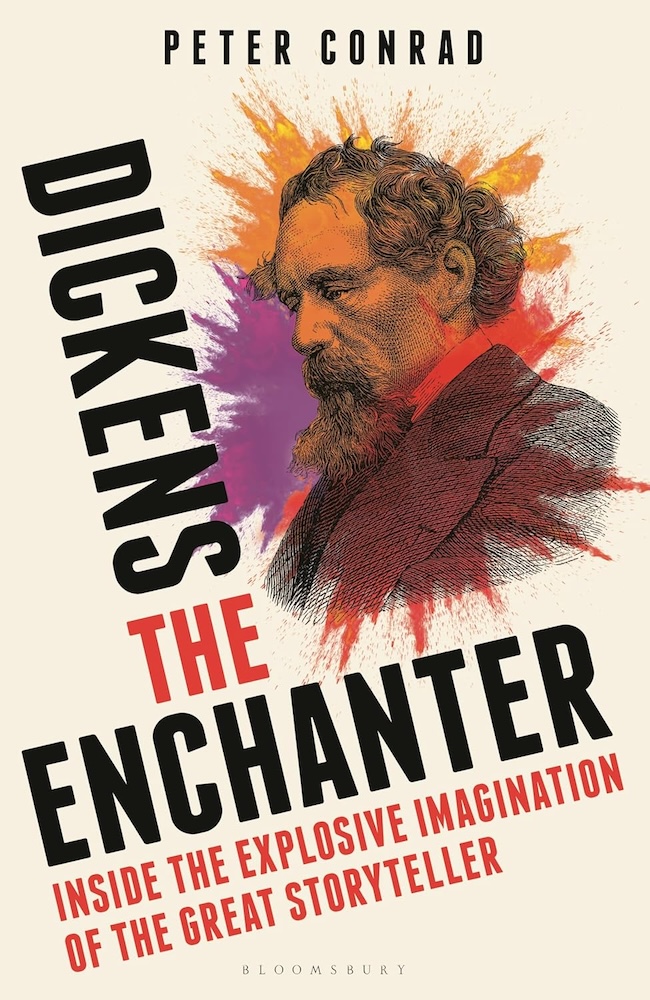
Having settled down after his trip to Australia, Philip Allingham, our Contributing Editor for Canada, has continued updating some earlier work (from over twenty years ago!) but has also discussed C.E. Brock's illustrations of Jane Austen's Emma. Like this one of the dandyish Mr Elton confusing Emma still further with his attention to her and her protégé, Harriet Smith, these provide a really delightful late-Victorian take on the much-loved Regency-period novel. Not for nothing is this era regarded as the "golden age" of book illustration. Philip has found time for a new book review, too, showing how Mark Conrad explores Dickens's "performative aesthetic" in his unconventional and wide-ranging study, Dickens the Enchanter.
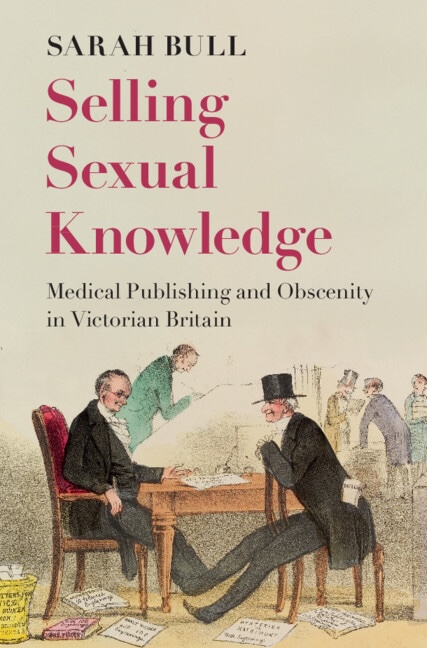
Keeping up with important new publications about the Victorian era may be a challenge, but it is certainly never dull. Compelling in quite a different way is another of the very informative book reviews handled by our Managing Editor, Diane Josefowicz, this month. This one is by Sofie Flowers, and shows how Sarah Bull's Selling Sexual Knowledge: Medical Publishing and Obscenity in Victorian Britain, looks at the intersection of "medicine, erotica, and pornography" in the publishing industry, and at those who were involved in this process. Thanks to Diane, our book reviews now consitute one of our most significant contributions to the whole field of Victorian studies.
Another pleasure this month has been to transcribe and adapt for our website a talk given by Rita Severi of the University of Verona, on Oscar Wilde's visits to Italy and (in connection with his admiration for the tomb of a young Raja in the English Cemetery there) his interest in India, her peoples, and her culture. Proof of this can be found in some of the articles published during his editorship of The Woman's World, not to mention a review of his own, in which he praises a new, up-and-coming Indian poet — material that is interesting in itself as well as for the light it throws on Wilde.
Correspondence: We were delighted to grant permission to the Louvre for the use of two of our images by a curator in the Sculpture Department, at a conference about the work of Henri de Triqueti. Our website will be duly credited. We in turn were grateful to Michael Riley for sending in some additional photographs of Osborne House, including a striking one of the majestic boar at the entrance to the Household Wing. Many thanks to Helen Hawken for prompting a a correction (a matter of chronology) to our background to Great Expectations. Another correspondent, Emily Wilson, alerted us to an out-of-date link in our account of the civil engineer, William T. Mulvany. In this connection, note that we now avoid making direct outbound links to all but the most well-established and stable websites, to avoid the dreaded "link rot." Instead, we simply add the current web address to the appropriate entry in the bibliography.
March 2026

arch has brought welcome hints of spring, the completion of one of last month's projects, and an abundance of new work to our website.

The completed project is Dennis T. Lanigan's section on the Pre-Raphaelite artist, Charles Fairfax Murray. As well as painting literary and classical subjects, Murray was a talented portraitist, and he painted one of the most striking portraits of his lifetime friend William Morris (shown on the right here), looking quite different from the rotund and tousle-haired "Topsy" of later years. Many thanks as usual to Scott Thomas Buckle for his input here.
Still with the Pre-Raphaelites, our partnership with the Pre-Raphaelite Society has led to our sharing several of the articles from last year's Pre-Raphaelite Society Review. The four selected by our Senior Editor, Simon Cooke, are now online: Sheilagh Quaile's "A Zardozi Shawl in William Holman Hunt’s The Children’s Holiday"; Caroline E. Giddis Macia's "An Elegy in Clay: Mary Seton Watts and Mortuary Design"; Laure Nermel's "‘How terribly did I long to be a man so as to paint there’: The making of the working female Pre-Raphaelite"; and Rocío Moyano Rejano's "Textualizing and Screening Pre-Raphaelite Paintings in Lisa Klein's and Claire McCarthy’s Ophelia."
While working with Simon on these, JB introduced a new sculptor, the very talented but rather unfortunate Irishman, John Hughes, part of ongoing work about sculptors who went to Australia, or whose statues and reliefs were sent there. This has been inspired by our Contributing Editor Philip Allingham's trip to New South Wales. Writing up the Victorian-era architecture and sculpture there has brought home to us both how much we lost when gifted artists emigrated: look at this little statue of a chimney-sweep in Sydney's Royal Botanic Gardens, for example, by the sculptor Charles Francis Summers, whose father came from Somerset. Another very skilled stone-carver was Edinburgh-born Walter McGill, who created this intricately carved replica of the Choragic Monument of Lysicrates in the same gardens, thought to be the finest of the many such replicas all over the world.
Among the large number of other works that Philip photographed were John Hughes's statue of Queen Victoria outside Sydney's Queen Victoria Building; relief panels by Percival Ball, Gilbert Bayes, Feodora Gleichen and Sir William Reid Dick for the outside of the Art Gallery of New South Wales; and Bayses's pair of equestrian statues in the gallery's forecourt: all examples of works that had to be shipped across the world to their new home. Additional photographs taken by Philip found their way into earlier discussions of Australian history.
Meanwhile, after Simon finished his work on the Pre-Raphaelite Society Review essays, he was able to complete a long and wide-ranging essay of his own, "Illustrating Science Romance: An Introduction," showing how early examples of speculative fiction inspired graphic imagery as the genre developed in the later part of the era. This brings in some notable illustrators who are quite new to us, especially Claude Allin Shepperson and Fred Jane, the latter best remembered for the compilation, Jane's Fighting Ships. Their illustrations are unnervingly effective, and often not just scary, but scarily prophetic.
Prophetic in another way was the novelist and poet George Meredith's recognition of gender fluidity. In her third contribution to our section on him, Sylvia Hornsby looks at the expression of androgyny in his novels, picking out those protagonists who challenge sexual stereotypes, and are challenged in their turn as they reject the conventional roles in which Victorian society sought to imprison them. The campaign to restore Meredith's reputation continues!
Our website is nothing if not collaborative: alongside editorial guidance, we have so many different contributors, sometimes participating in joint projects — as in our current series on horses in the Victorian period — and sometimes co-operating on individual topics. Thomas Scott Buckle advises on paintings, for example, and Shirley Nicholson proofreads. Two pieces of research came in recently on that macabre subject, Victorian poisoners, extracts from both of which helped to make up a general introduction to it. Thank you to Professors François Grosjean and Béatrice Laurent — and to Nell Hocquel, Larissa Makhoul and Cecilia Mestre, who worked on the project under the latter's supervision — for providing some fascinating (if grisly) insights into it.
We have a couple of new and comprehensive book reviews to offer now, too. In the first of these, Taylor Tomko delves into Sandhya Shetty's Imperial Pharmakon: Writing and Medicine in the Long Nineteenth Century (2025), praising the unusually wide range of genres that Shetty explores "to either advocate for or to critique Western imperial medicine in the long (long!) nineteenth century." We're proud to say that Taylor was once an editorial assistant on our website. The other review is by Dipyaman Bhowmick, who discusses and evaluates John MacNeill Miller's The Ecological Plot: How Stories Gave Rise to a Science. Among much else, Dipyaman shows how Miller provides fresh entries to novels like Disraeli's Sybil, Elizabeth Gaskell's Mary Barton, and Charles Kingsley's Alton Locke. Ecocriticism has been around for some time: we look forward to including more work in this area. Special thanks are due here to our Managing Editor, Diane Josefowicz, for dealing with our much-expanded book review programme.

Correspondence, etc: Many thanks also to the Pugin Society for giving us a great write-up in their latest newsletter: "This is a wonderful site, which is constantly updated, with new contributions constantly appearing in a large number of different areas of Victorian studies. Part of its original aim was to make interdisciplinary links, so that it is possible to move easily, for example, from architecture and painting to the great literature of the period, or to issues of science or music or questions of faith and much more." It was pleasing too that the Society put the spotlight on our images: "A particular advantage of the site is the very extensive number of images, of all sorts, that can be looked at in detail and enlarged for closer examination." Praise is always welcome, and we'd like to return the compliment(s) by pointing out that the Pugin Society has a splendid website of its own, with considerable visual appeal, offering a full programme of events and beautifully produced publications: http://www.thepuginsociety.co.uk/ Do check it out!
February 2026
f variety really is the spice of life, our website has plenty to enliven these winter days, with a range of new contributions in different areas.
Our own team has been especially busy, with our Managing Editor Diane Josefowicz leading the field by guiding us expertly through Martin Hewitt's recent book, Darwinism's Generations: The Reception of Darwinian Evolution in Britain, 1859-1909. The concept of a generation and the nature of historical change are among the ideas that come under scrutiny here, so there is much in the review to interest specialist and non-specialist alike. Readers will want to turn to the book itself to find out more, and to see whether they agree that Hewitt could usefully have enlarged on the reception of Darwin's ideas beyond Britain. A proposal for a future volume, perhaps?
Meanwhile, JB has been working with some of that variety of contributions mentioned at the beginning. Tim Willasey-Wilsey, a former contributing editor who still takes a keen interest in the site, photographed the monuments of the Guildhall in the City of London for us, while attending a function there: of the national heroes thus honoured, we now have Pitt the Elder, Pitt the Younger, Nelson and Wellington. Michael Riley, who has also been in touch in previous years, sent in photographs of the premises of Hughes & Mullins, the royal photographers who operated on the Isle of Wight and recorded many of the royal family's events there, from a a family gathering in the grounds of Osborne House, to that popular pastime, the tableau vivant.
Before escaping from winter for a few weeks in the antipodes, Philip Allingham, our Contributing Editor from Canada, finished updating some of the earliest work on the website, including an informative piece on Dickens's tour of Philadelphia's "solitary prison," the Eastern Penitentiary, during his first visit to America. It made a great impact on him. Hard to believe, but this first went online in 2004! Very soon after arriving in New South Wales, Philip began sharing with us some glimpses of early architecture here, starting with a delightful set of photographs of the Tacking Point Lighthouse by James Barrett, who rose from humble beginnings in Arbroath in Scotland to leave a lasting legacy as Colonial Architect on the other side of the world. Next came Trial Bay Gaol, introducing prison reformer Harold Maclean, whose family also went out from Scotland, and who left an important mark of another kind on New South Wales. Philip's photograph of Australia's first Prime Minister, Sir Edmund Barton, then prompted a piece about the Federation of Australia, in which Barton played such a significant part.
Much new work is in progress in the visual arts: Dennis T. Lanigan has opened a new section on Charles Fairfax Murray, whose Pre-Raphaelite works have been unfairly neglected. We now have a biography of him, and several of his paintings, but more are in the pipeline. One particularly eye-catching work so far is The Concert. Turning to a more familiar name, we have a review of a new book on John Singer Sargent, by Emily Eells, Isabelle Gadoin and Charlotte Ribeyrol: Sargent. Le beau monde et son revers. A landmark study for the French audience, it is discussed for us by Laurent Bury. We really are fortunate in our art historians: Pamela Gerrish Nunn has also reviewed a new book for us, this time in the design section: Lynn Hulse's May Morris Designs: "The Essence and Soul of Beautiful Embroidery.
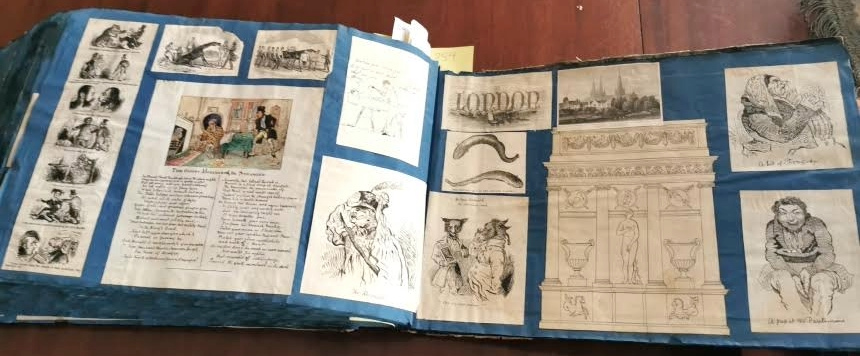
Most intriguingly, Randall Wallace, a new contributor, sent in information and details about a large, bound collection of hundreds of mostly Victorian illustrations, with significant links to the publishing house of Richard Bentley, and Dickens's early publications. So far, Randall has provided an introduction and taken a close look at two sketches by Robert Seymour that indicate the approach Dickens was taking to the Pickwick Papers project. Randall and JB then worked together to look at seven illustrations by George Cruikshank for Oliver Twist and consider their possible source — a fascinating exercise. Two more of Seymour's published Sketches followed, both with print studies containing rather curious doodles: "A Man coming"! and "Delicacy, my love, delicacy!
Correspondence, etc: Many thanks to Professor François Grosjean for alerting us to his work on the "Rugeley Poisoner" William Palmer (we have a piece about him here) and what he rightly calls a "poignant story: that of a trusting young solicitor in the 1850s, who was drawn into the scandal that surrounded the murderer — a connection that ultimately poisoned his own life. We're grateful as well to the Pugin Society, for its generous praise for our website in their spring newsletter. It was also kind of Professor Hugh Goddard, Honorary Professorial Fellow in the Alwaleed Centre for the Study of Islam in the Contemporary World, at the University of Edinburgh, to advise on how we might fill a gap in our section on religion, where there is, as yet, no mention of the Muslims in Victorian Britain — although the first mosque over here was founded in 1889, in Liverpool. Thanks are also due to Doug Martyn, who spotted a misspelled name in the book design section that ran through all too many items. We're always very grateful for such notifications.
January 2026

arm New Year Greetings from the Victorian Web! As Dickens puts it at the end of his Christmas book, The Chimes, "May the New Year be a happy one to you, happy to many more whose happiness depends on you!" Our Managing Editor, Diane Josefowicz, has now sent 2025 down into the archives: we trust that you'll find much in our ever-expanding website to interest and inspire you as 2026 unfolds.

Two good sources of inspiration, both overseen by Diane as well, are our conference notices/calls for papers, and our book reviews. Note especially that the deadline for abstracts for the Thomas Hardy Conference in Dorset this summer was extended to 25 January. It does pay to keep your eyes open for such extensions. As for reviews, here's one not to be missed: Christian Gallichio discusses The Nineteenth-Century Novel and the Pre-Cinematic Imagination, by Alberto Gabriele. This develops the idea that optical toys and tools like the zoetrope or the microscope helped propel the novel form towards modernism — a critical approach that produces some strikingly original analyses, for instance, in Gabriele's final chapter, of George Eliot's Middlemarch.
Technological advance affected all spheres of production, some more obviously than others. For example, JB brought in a contemporary account of the maritime engineer, Andrew Laing, whose work on turbines powered the Mauretania early in the next century, and helped turn Newcastle into a powerhouse of shipbuilding. The achievements of Laing and other local shipbuilders would be commemorated in some of A.K. Nicholson's dynamic stained glass in Newcastle Cathedral. Later in the month, JB added Count Gleichen's terracotta bust of Mary Seacole, the Jamaican nurse now celebrated for her work in the Crimea. Florence Nightingale's reputation has fallen somewhat as Seacole's has risen, and JB also took a look at the issues involved here.
Feeling a bit flat after the holidays? Our Senior Editor, Simon Cooke, has the answer: his new illustrated essay examines Max Beerbohm's irreverent take on some of the most popular artists of the Victorian period, "Mocking the Pre-Raphaelites: The Comic Art of Max Beerbohm." You may be familiar with some of the individual cartoons, but this round-up definitely has a cumulative effect!
Meanwhile, fittingly for this time of year (and for his own love of acting), our Contributing Editor for Canada, Philip Allingham, has been revising and adding to his work on theatrical adaptations of Dickens's works. The list of these has grown, and one important addition, recently finalised, is "Films and Plays from A Tale of Two Cities." With the panto season ending, Philip turned back to his more usual work, on the Dickens illustrators. Of special interest here is his updated note on Phiz's wrapper design for the monthly serialisation of A Tale of Two Cities. Updating is essential in an area where scholarship is so active, and most recently he has been improving his scans and commentaries on Fred Barnard's illustrations of key moments in the same novel.
As so often, one of our most active and valued contributors, Dennis T. Lanigan, had been hard at work promoting one of the less fêted Pre-Raphaelites, one whose kindly personality would have been impossible for Max Beerbohm to lampoon: Thomas Matthews Rooke, whose paintings can sometimes ambush you with their colour and vision. Herod's Feast is just one example. Dennis also contributed a drawing by the sculptor Thomas Woolner, and a commentary on this unexecuted design for the Cawnpore (Kanpur) Memorial in India.
Despite a recent emphasis on updating existing pages, we now have 136,654 documents and images as compared with 132,386 just over a year ago (December 2024).
Correspondence: A particular pleasure over the festive season was some well-informed input from Michael Riley on the background and sequence of construction at Queen Victoria's home on the Isle of Wight, Osborne House. Stuart Orr also brought to our attention some interesting research on the Julius Beer Mausoleum at Highgate Cemetery, which overturned some attributions in its listing text and other trusted sources. Another useful comment, this time on the admission of women students to the Victorian art school, Cary's (previously known as Sass's), came from Dr. Gilles Weyns. We welcome all such corrections, updates and additional information.
Last modified 14 October 2026